
Choosing the right industrial caster wheels is important for equipment mobility, workplace safety and long-term operating performance. Different applications require different wheel materials, mounting methods and load capacities. A suitable caster solution can improve movement efficiency, reduce noise and extend service life.
Qingdao Gleam Hardwares supplies industrial caster wheels, swivel casters, fixed casters and customized OEM caster solutions for distributors, importers and equipment manufacturers worldwide.
Learn more about our industrial caster wheels manufacturing solutions.
1. Understand the Application Environment Before Selecting Casters
The working environment is the first factor when selecting caster wheels. Industrial carts used in factories, warehouses and workshops may require different solutions compared with furniture, medical equipment or commercial products.
Before choosing casters, buyers should consider floor conditions, operating frequency, temperature, load requirements and whether the equipment needs frequent movement.
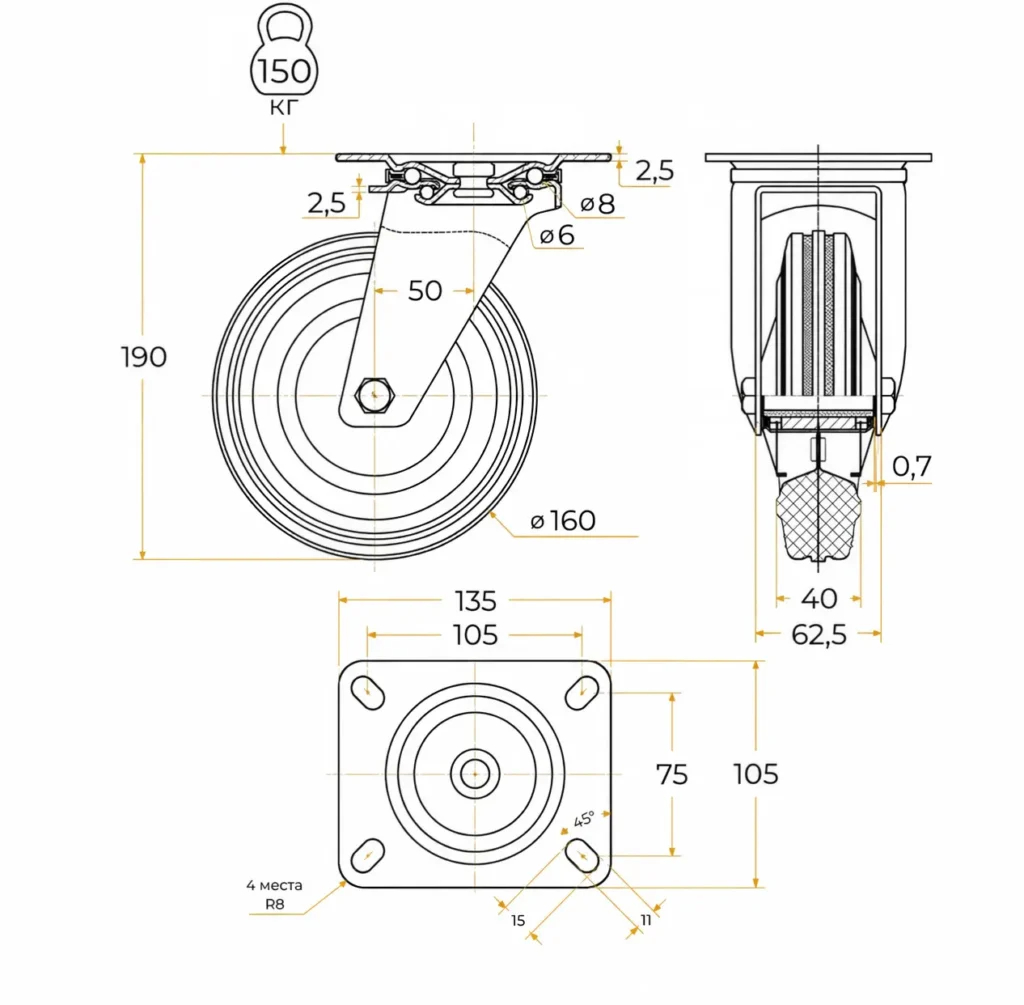
Illustrative caster drawing. The dimensions and load label shown apply only to that drawing; obtain the approved specification for the caster being quoted.
2. Choose the Correct Caster Wheel Material
The wheel material directly affects performance. Common industrial caster wheel materials include rubber, TPR, PU and nylon.
Rubber Caster Wheels
Rubber wheels are often considered where noise and floor contact matter. Confirm compound, rated load, rolling resistance and floor marking for the actual surface. For wheel-only repairs, compare the solid rubber wheel with metal hub and match the axle and hub dimensions.
TPR and PU Caster Wheels
TPR and PU wheels offer a balance between load capacity, wear resistance and smooth rolling performance. They are widely used for industrial equipment, trolleys and commercial applications.
Nylon Caster Wheels
Rigid nylon wheels may reduce deformation on suitable floors. Check noise, impact, floor damage and chemical compatibility for the specific grade and environment; the material name alone does not establish suitability.
3. Select Swivel, Fixed or Brake Casters
Different caster structures provide different movement functions.
- Swivel casters: Allow flexible 360-degree movement and easy direction changes.
- Fixed casters: Provide stable straight-line movement.
- Brake casters: Combine mobility with equipment positioning and safety.
For a coordinated compact trolley set, compare the 75mm caster range for trolley OEM. Existing threaded mounting points should be checked against the threaded-stem caster interface before choosing the wheel size.
4. Consider Load Capacity and Wheel Size
Choosing the correct caster size is essential for safe operation. Larger caster wheels usually provide easier movement over uneven surfaces, while smaller wheels are suitable for compact equipment.
Buyers should calculate total equipment weight, load distribution and working conditions before selecting the appropriate caster specification.
Common catalogue wheel diameters include 75, 100, 125, 160 and 200mm. These are wheel diameters, not overall caster heights or load ratings. Confirm the exact mounting dimensions and brake function. The industrial caster selection table separates complete assemblies from replacement wheels.
5. Common Applications of Industrial Caster Wheels
Industrial caster wheels are widely used in:
- Factory carts and material handling equipment
- Warehouse trolleys
- Tool cabinets
- Furniture and commercial equipment
- Medical equipment
- Customized mobile products
6. Why Work with a Professional Caster Manufacturer
A reliable caster supplier should provide stable product quality, consistent specifications and customization support. Professional manufacturers can help buyers select suitable materials, mounting structures and packaging solutions according to actual applications.
Qingdao Gleam Hardwares focuses on hardware products and OEM customization, supporting global customers with caster wheels and related hardware solutions.
Frequently Asked Questions
What information is needed when ordering industrial casters?
Buyers should provide caster size, wheel material, mounting type, required quantity and application details.
Which caster wheel is best for industrial carts?
The best option depends on load capacity, floor conditions and working environment. Rubber, PU and nylon wheels each have different advantages.
Can industrial caster wheels be customized?
Send the drawing, material and mounting requirements, quantity and target duty. Available options, sample requirements and any tooling or testing are confirmed for the proposed model before production.
Prepare a Model-Specific Enquiry
Use the industrial vs furniture caster comparison to check operating priorities. Include loaded equipment weight, caster layout, floor conditions, wheel dimensions, mounting drawing and order quantity.