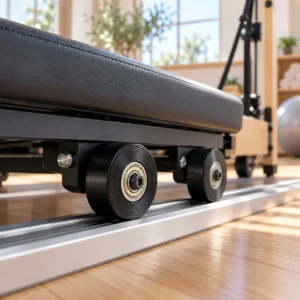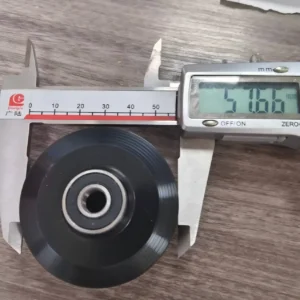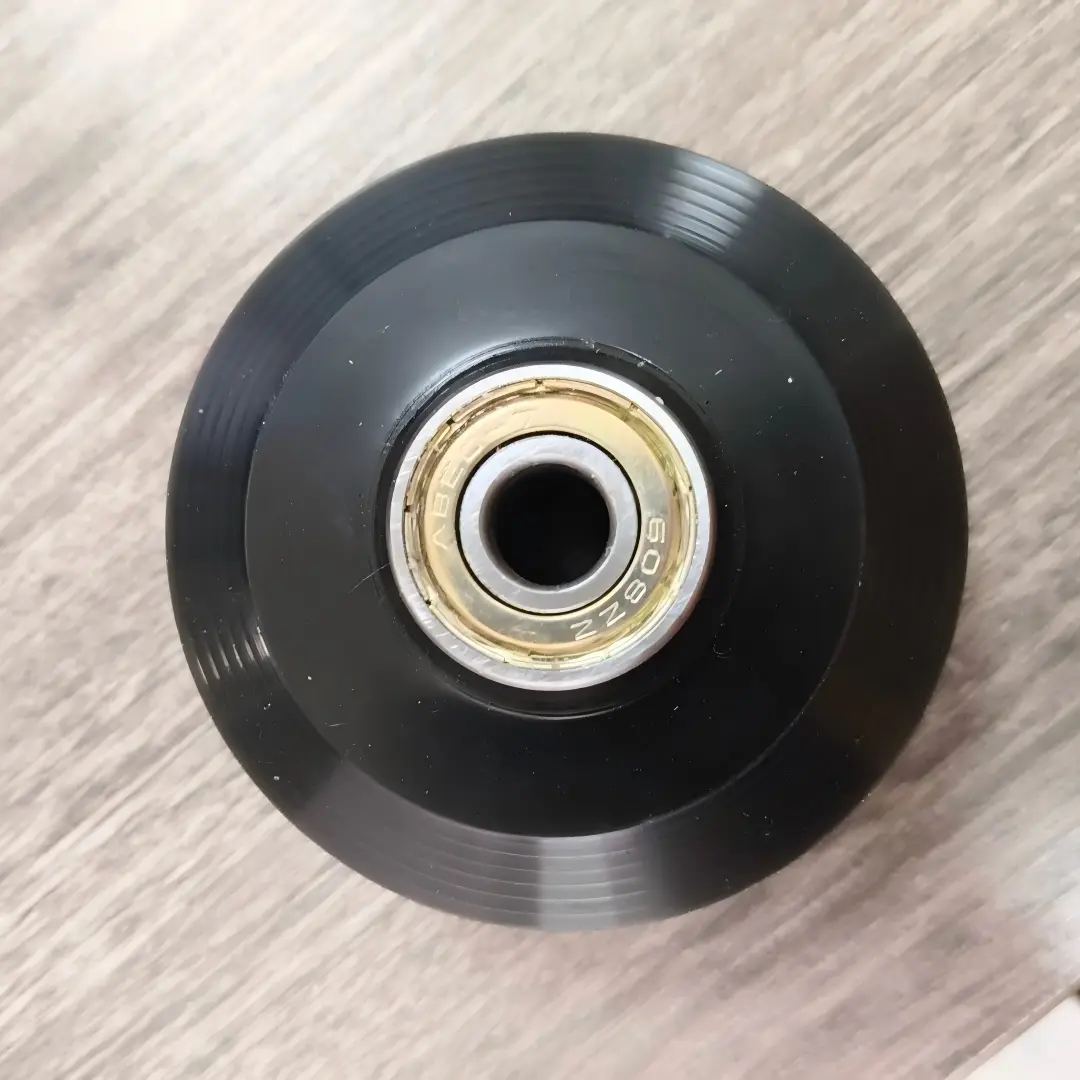
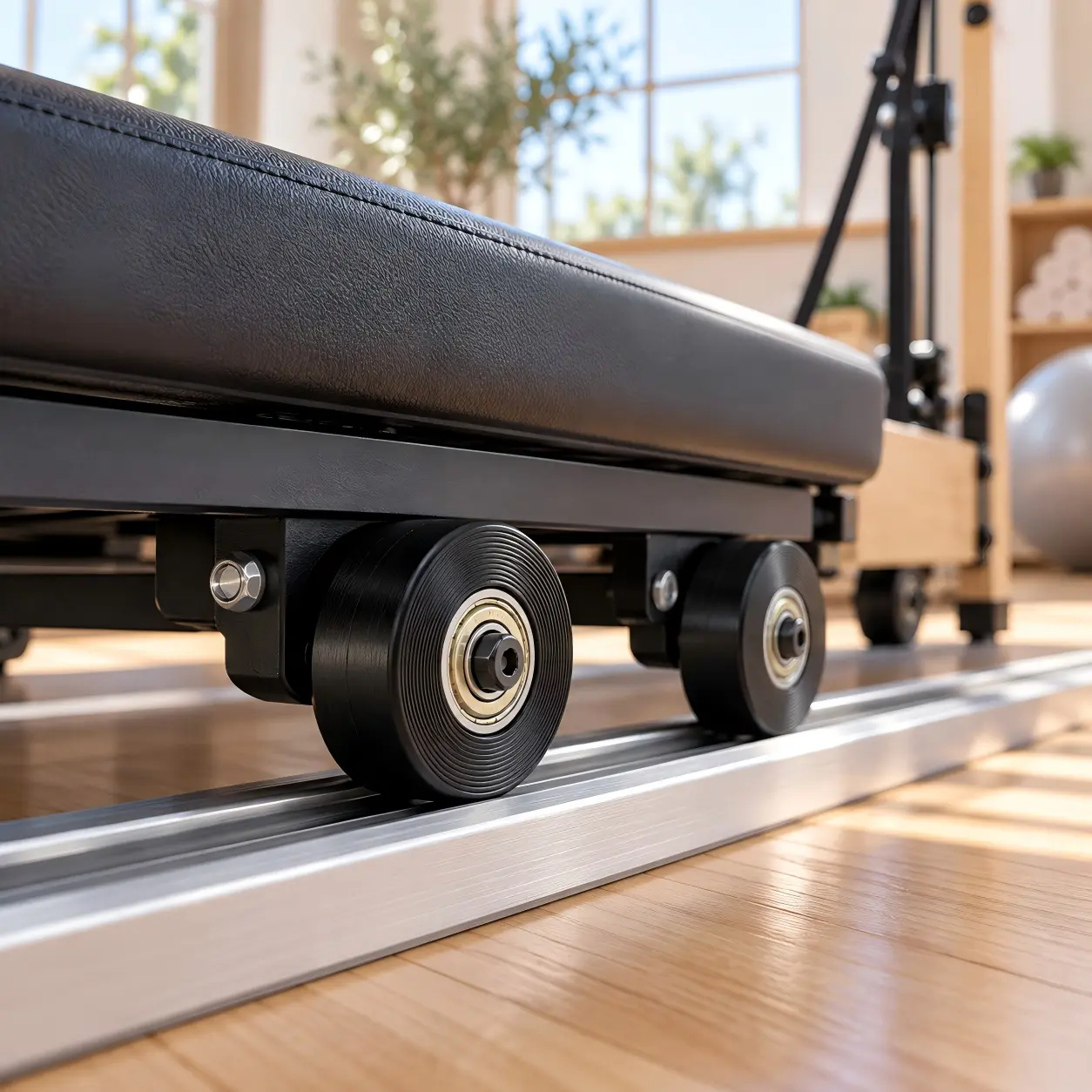
PU Pilates reformer carriage wheels in 90A and 92A options give equipment engineers a clear hardness starting point for carriage projects. This page is designed for B2B buyers comparing harder polyurethane wheels in 52, 57, 58, 59 or 72 mm project sizes, with custom core, bearing and private-label requirements.
Qingdao Gleam Hardwares develops the wheel around the machine rather than treating 90A or 92A as a complete performance claim. The same hardness can behave differently when PU chemistry, tread thickness, metal support, bearing alignment and rail contact change.
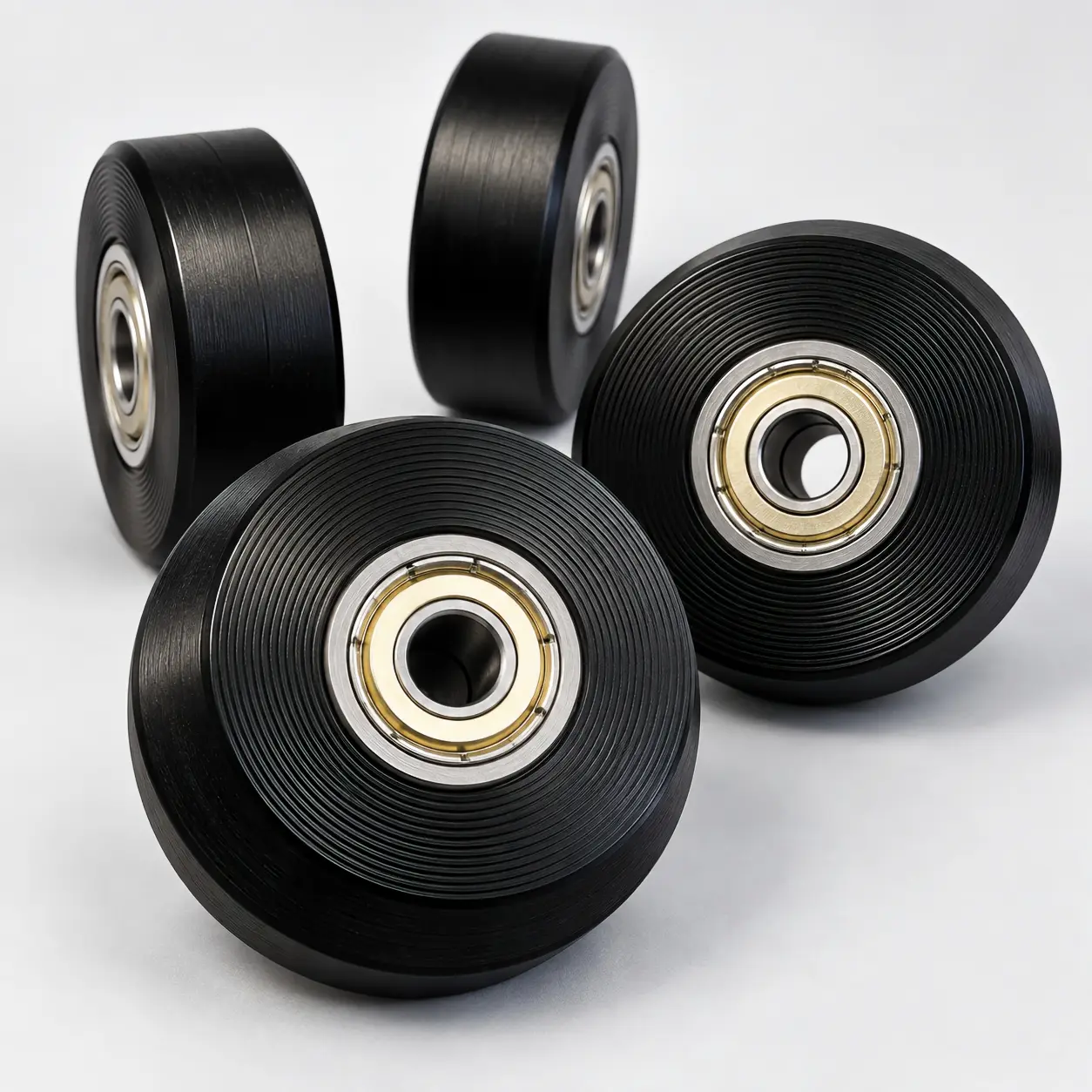
90A and 92A Pilates Wheel Selection Table
| Selection item | 90A reference | 92A reference | Confirm before order |
|---|---|---|---|
| Typical purchasing priority | Balance of support and some compliance | Firmer support and lower deformation target | Actual sample ride on the intended rail |
| Diameter options | 52 / 57 / 58 / 59 / 72 mm | 52 / 57 / 58 / 59 / 72 mm | Mold feasibility and exact tolerance |
| Core options | Reinforced polymer or metal | Metal often preferred for higher static targets | Core design, weight and bond |
| Bearing options | 608ZZ / 608-2RS or custom | 608ZZ / 608-2RS or custom | Axle, spacer, stack and sealing |
| Preliminary wheel load | 60–100 kg per wheel | 70–120 kg per wheel with suitable metal-core design | Complete assembly and static/dynamic validation |
| Test reference | Shore A hardness | Shore A hardness | Method, temperature, sample thickness and tolerance |
The ranges above support preliminary quoting only. A harder wheel does not automatically carry more load, run more quietly or last longer. Final load and application suitability depend on the complete construction and test plan.
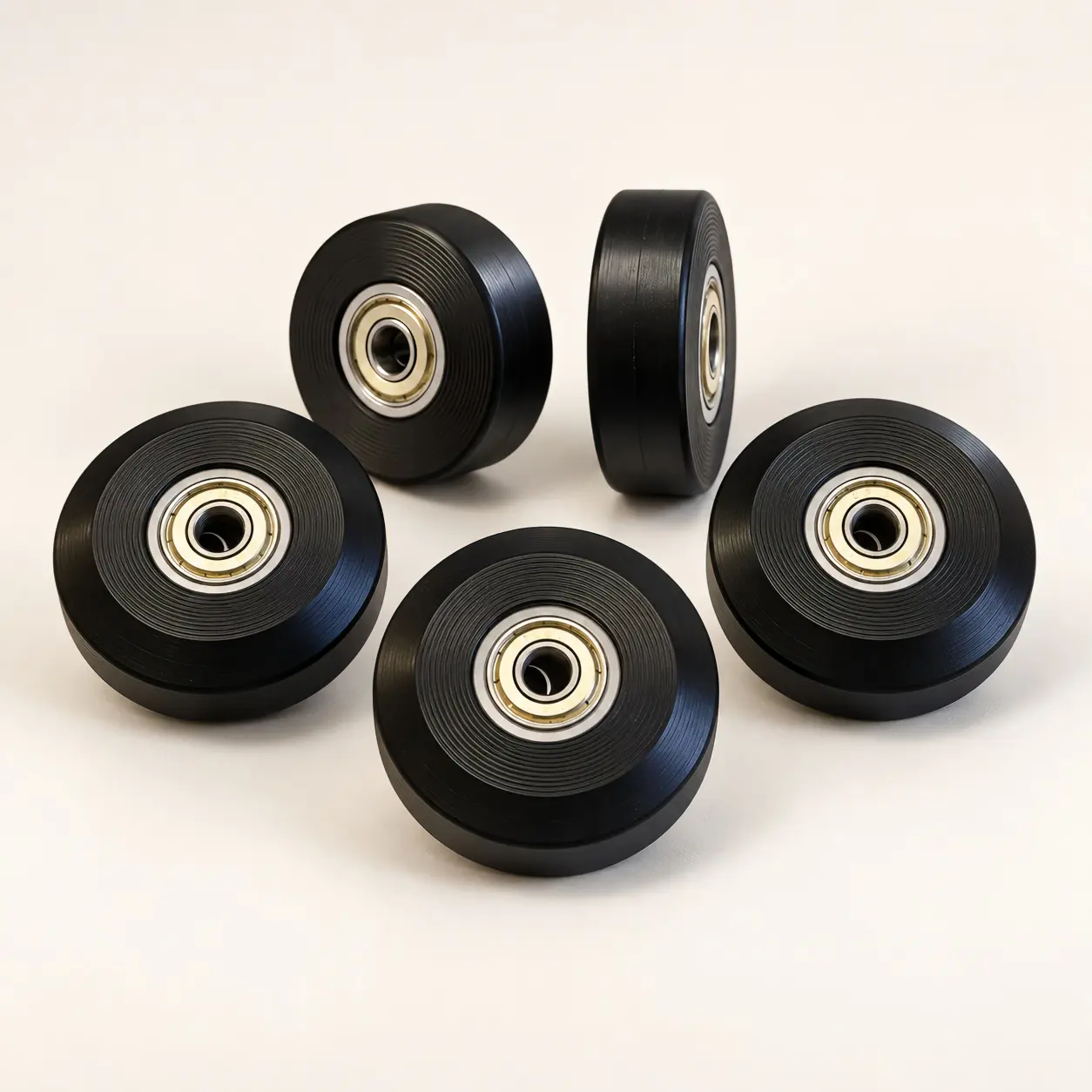
How Hardness Affects the Reformer Ride
A softer PU can absorb more small vibration but may show greater compression under a long static load. A harder PU may hold shape better in some constructions and can feel more direct on the rail, but it may transmit more sound or vibration if alignment and rail cleanliness are poor. This trade-off is why studio-equipment buyers should compare complete samples rather than selecting only from a catalog number.
Hardness may be checked using ASTM D2240 or an agreed equivalent. If rebound, abrasion or compression set matters, state a separate test method and acceptance target. Shore A does not replace those tests.
Sizes and Wheel Positions
52 mm and 58 mm replacement wheels are common procurement searches, while 57, 59 and 72 mm appear in custom or model-specific programmes. These numbers do not create a universal fit standard. Record the carriage wheel position, lateral guide position, rail cross-section, total hub width and bearing offset for each SKU.
For a multi-model range, use one specification sheet per wheel and a compatibility table controlled by the buyer. We can support color coding or laser/printed identification where the construction and quantity allow it.
Commercial Advantages of a Hardness-Controlled Range
- Create clear good/better application options without relying on vague ‘high quality’ language.
- Give distributors measurable selection points for 90A and 92A wheel kits.
- Use the same packaging system across several diameters while preserving SKU identification.
- Reduce repeat-order variation through an approved hardness range and golden sample.
Recommended Sample Approval
Check diameter, width, hub, bearing, visible runout, Shore A hardness and appearance. Install the sample set on the intended reformer and assess starting force, rolling feel, sound, lateral play and behaviour after an agreed static dwell. Record the result so the next batch can be compared to the same basis.
Related Pilates Wheel Solutions and Guides
- 58mm metal-core Pilates reformer wheels
- 52mm Pilates replacement wheels
- silent reformer bearing wheel programme
- flat-spot and noise troubleshooting guide
- how to measure reformer replacement wheels
- Pilates wheels and pulleys collection
Frequently Asked Questions
Are 90A and 92A standard for every reformer?
No. They are useful industry reference options, but the correct hardness depends on the machine, wheel construction, rail, load and ride target.
Can 90A and 92A use the same mold?
Often the same geometry can be reviewed with different PU formulations, but shrinkage, bonding and performance still require sample approval.
Can you provide a test report?
Testing requirements can be agreed for the project. Define the method, sample conditioning, tolerance and reporting format before production.
What sizes can be customized?
52, 57, 58, 59 and 72 mm are reference sizes; other dimensions can be reviewed from a drawing, original sample and order forecast.
Compare 90A and 92A PU Wheel Samples
Send the wheel drawing, rail/axle details, static-load conditions, size list, target hardness and annual volume. We will recommend a sample plan for your B2B programme.