
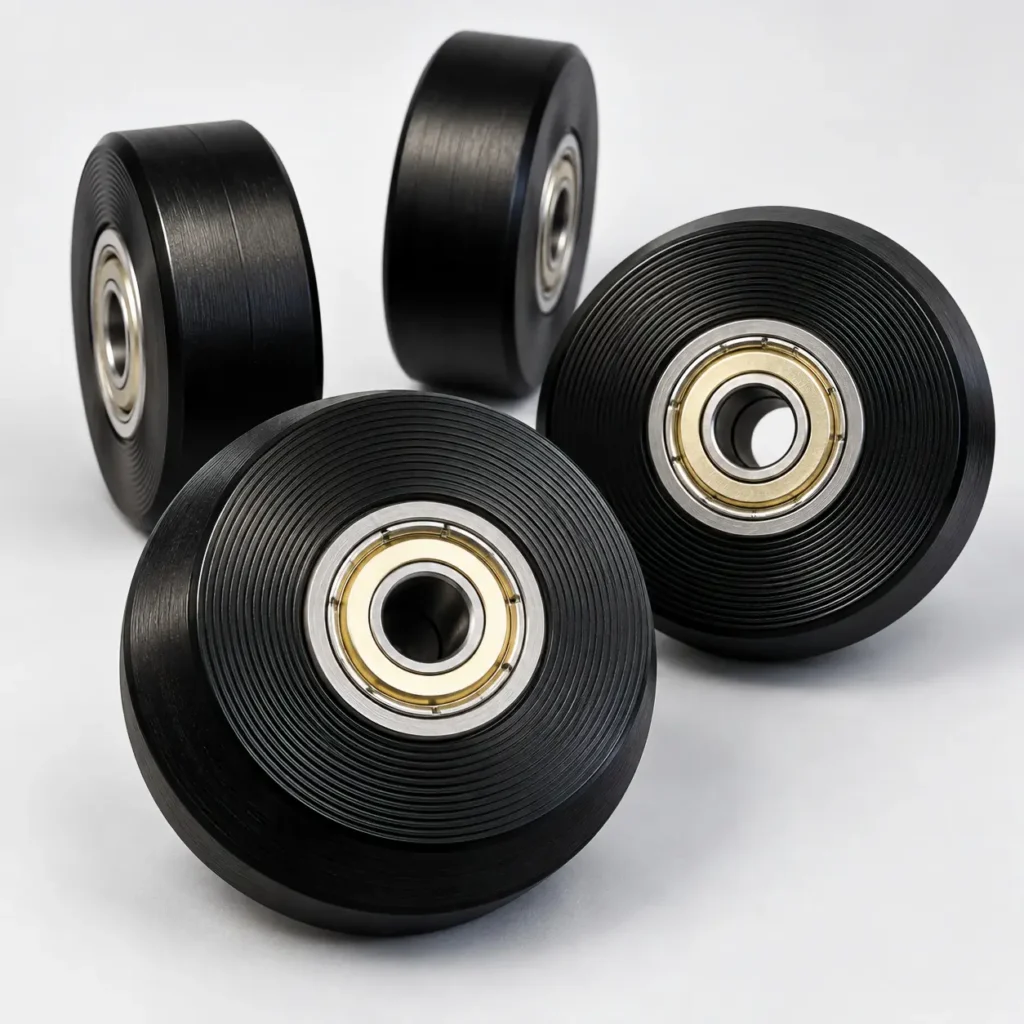
Anti flat spot Pilates wheels are best understood as a design and test objective, not a permanent guarantee. Flat spots, rhythmic bumps and carriage noise can come from PU compression, bearing wear, dirty rails, uneven load distribution, misalignment or an overtight lateral guide. This guide gives equipment buyers and service partners a practical diagnosis and purchasing framework.
For B2B importers, preventing the wrong diagnosis matters commercially. Replacing good wheels does not solve a damaged rail or spacer problem, while selling an under-specified replacement kit creates returns. A documented inspection sequence makes the product easier to support and more valuable to distributors.
What Is a Reformer Wheel Flat Spot?
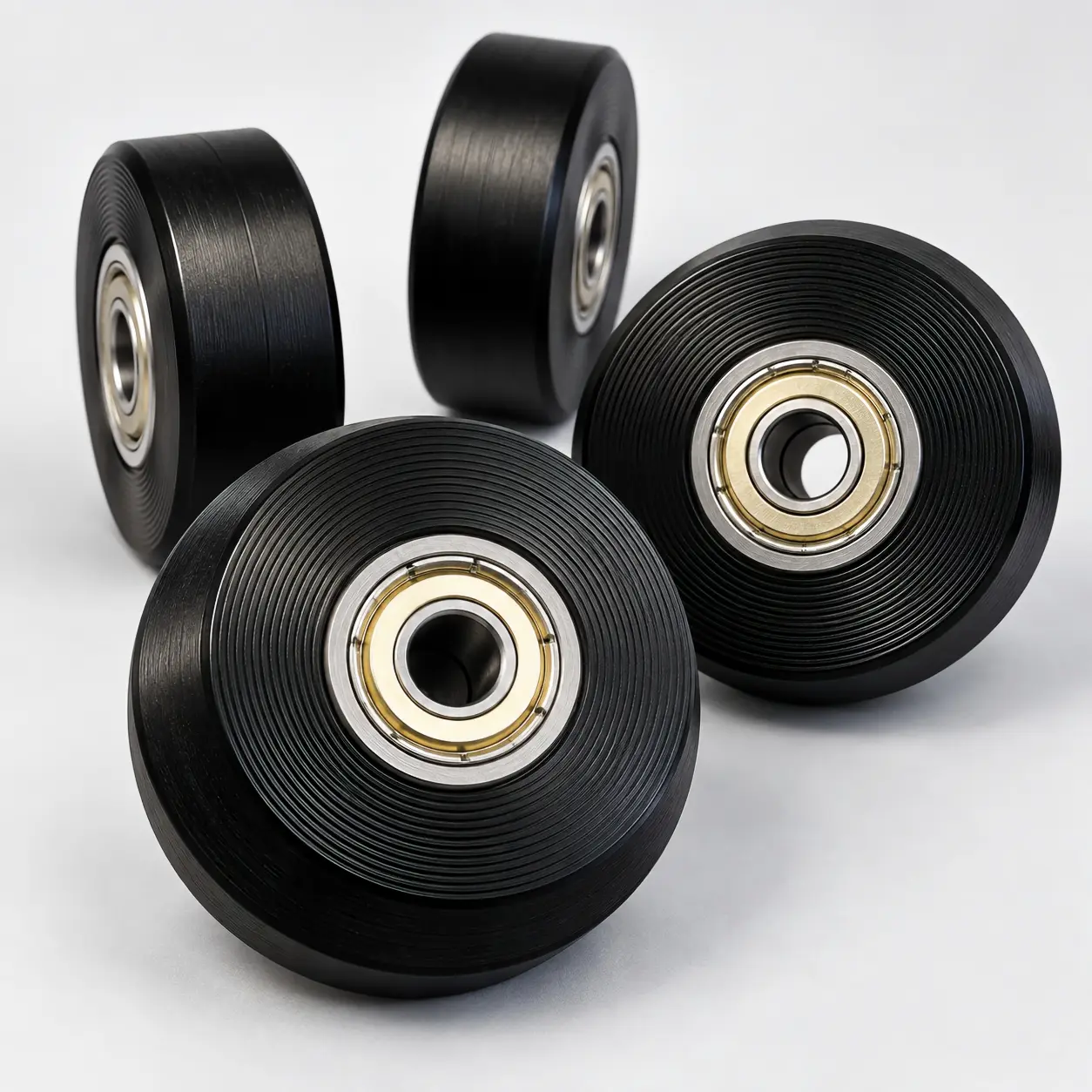
A flat spot is a local change in wheel shape that can create a repeating bump as the carriage moves. It may be temporary deformation that recovers after unloading, permanent compression set, surface wear, a molding defect or damage caused by debris. The first step is to mark the wheel and confirm whether the bump repeats once per revolution.
Do not confuse a flat spot with a damaged bearing. A bearing can create roughness at several rotational positions or a continuous grinding feel. A rail joint, dent or contamination can create a bump at the same carriage location regardless of which part of the wheel contacts it.
Six Common Causes of Noise or Bumping
| Cause | Typical clue | Inspection | Corrective direction |
|---|---|---|---|
| Static compression | Bump after long storage in one position | Inspect wheel roundness before and after recovery | Review PU, core, load distribution and storage position |
| Bearing wear or contamination | Rough feel when wheel is rotated by hand | Isolate each bearing and check play/drag | Replace the specified bearing or complete wheel kit |
| Dirty or damaged rail | Noise at the same carriage location | Clean and inspect rail surface | Remove debris; repair/replace damaged rail as appropriate |
| Incorrect lateral preload | Heavy travel, squeak or side scuffing | Check guide-wheel contact and adjustment | Reset to the equipment specification |
| Axle/spacer error | Side play, binding or uneven bearing load | Measure installation stack and fastener condition | Use the correct spacer and controlled tightening |
| Wheel mismatch | Different carriage height or contact between positions | Compare all wheel dimensions and hardness | Install a verified matched set |
Why Hardness Alone Does Not Prevent Flat Spots
90A and 92A PU are useful firmer reference options, but Shore A hardness is an indentation measurement, not a direct compression-set or load-capacity rating. PU chemistry, tread thickness, core diameter, wheel temperature and duration under load influence the result. A harder wheel may also transmit more vibration when rail or bearing conditions are poor.
Use ASTM D2240 or an agreed equivalent for hardness. If wear is a priority, ISO 4649:2024 provides abrasion-test methods. Neither standard sets one universal Pilates reformer pass value, so the buyer must define the target.
How to Define a Practical Static-Load Test
- State the total carriage and user/load condition.
- Record the number and position of supporting wheels.
- Specify the rail, axle, spacer and wheel assembly.
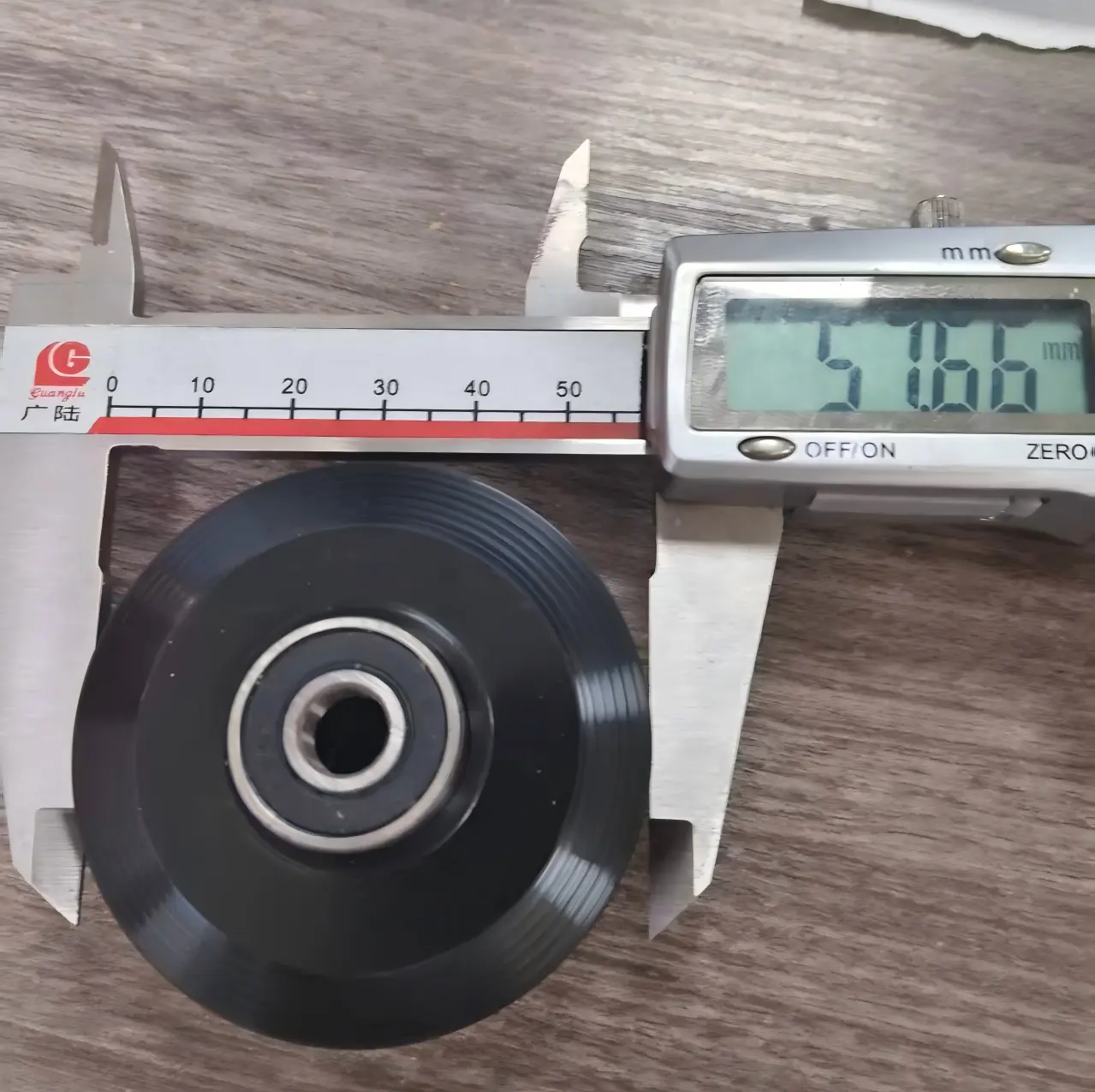
- Condition and measure wheel diameter before loading.
- Apply the agreed load for a stated dwell time and temperature.
- Measure immediately after unloading and after an agreed recovery period.
- Run the complete carriage and record bump, noise and visible damage.
For early product discussion, 50–100 kg per wheel is a common planning reference, while selected metal-core designs may be discussed at 80–120 kg per wheel. Final limits must come from the approved construction and assembly test. Loads are not always shared equally, so simply multiplying one wheel number by wheel count can be misleading.
Noise Testing That Produces Useful Results
If low noise is a purchasing requirement, define carriage speed, applied load, travel distance, rail condition, measuring distance, room background and microphone position. Test both directions and compare an approved reference sample. This is more useful than writing “silent” or “below 30 dB” without conditions.
Inspect the bearing separately from the PU tread. A 608ZZ or 608-2RS bearing can be suitable in some wheel designs, but fit, lubrication, alignment and contamination protection affect the result. Side wheels and rope pulleys should also be checked because their contact can transmit sound into the frame.
Preventive Maintenance for Studios and Service Networks
- Keep rails clean using the equipment maker’s approved method.
- Inspect the wheel circumference, bearing rotation and fasteners on a regular schedule based on use.
- Avoid leaving the carriage with unnecessary additional load during long storage.
- Replace damaged parts with a dimensionally verified model, not a similar-looking wheel.
- Record the machine model, revision, wheel position and installation date.
- Keep cleaning liquids away from bearing seals and PU unless material compatibility is confirmed.
Turn Technical Control into Better After-Sales Value
- Supply a troubleshooting card with each private-label replacement kit.
- Use a model-and-dimension matrix so distributors recommend the correct part.
- Offer matched wheel sets and clearly list any included bearings, spacers or fasteners.
- Use agreed static-load and noise conditions to support objective repeat-order decisions.
Choose the Right Product Programme
For firmer construction, see 58mm metal-core Pilates reformer wheels and 90A/92A PU Pilates wheels. For bearing and noise-focused projects, review silent Pilates reformer bearing wheels. Buyers building a broad range can start at the OEM Pilates reformer wheels page or browse the complete wheels and pulleys collection. Read the replacement-wheel measurement guide before sending a sample.
Frequently Asked Questions
Can a flat spot recover by itself?
Some temporary deformation can reduce after unloading, while permanent compression or damage will not. Measure before and after a defined recovery period.
Will a metal core eliminate deformation?
No. It can improve support, but PU formulation, geometry, temperature, dwell and load distribution remain important.
Does a harder wheel always run more quietly?
No. A harder wheel may transmit more vibration. Rail cleanliness, bearing condition and alignment often dominate sound.
When should a full set be replaced?
When the wheels are a matched system and show similar wear, a full set may improve consistency. Inspect the equipment and follow the model-specific service requirement.
Define an Anti-Flat-Spot Wheel Test
Send the machine and wheel-position photos, dimensions, wheel count, load/dwell conditions, noise concern, quantity and target packing. We will review a suitable sample programme.