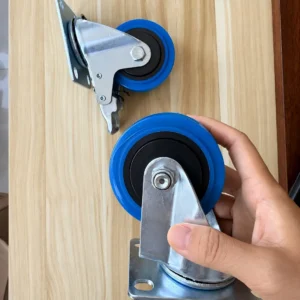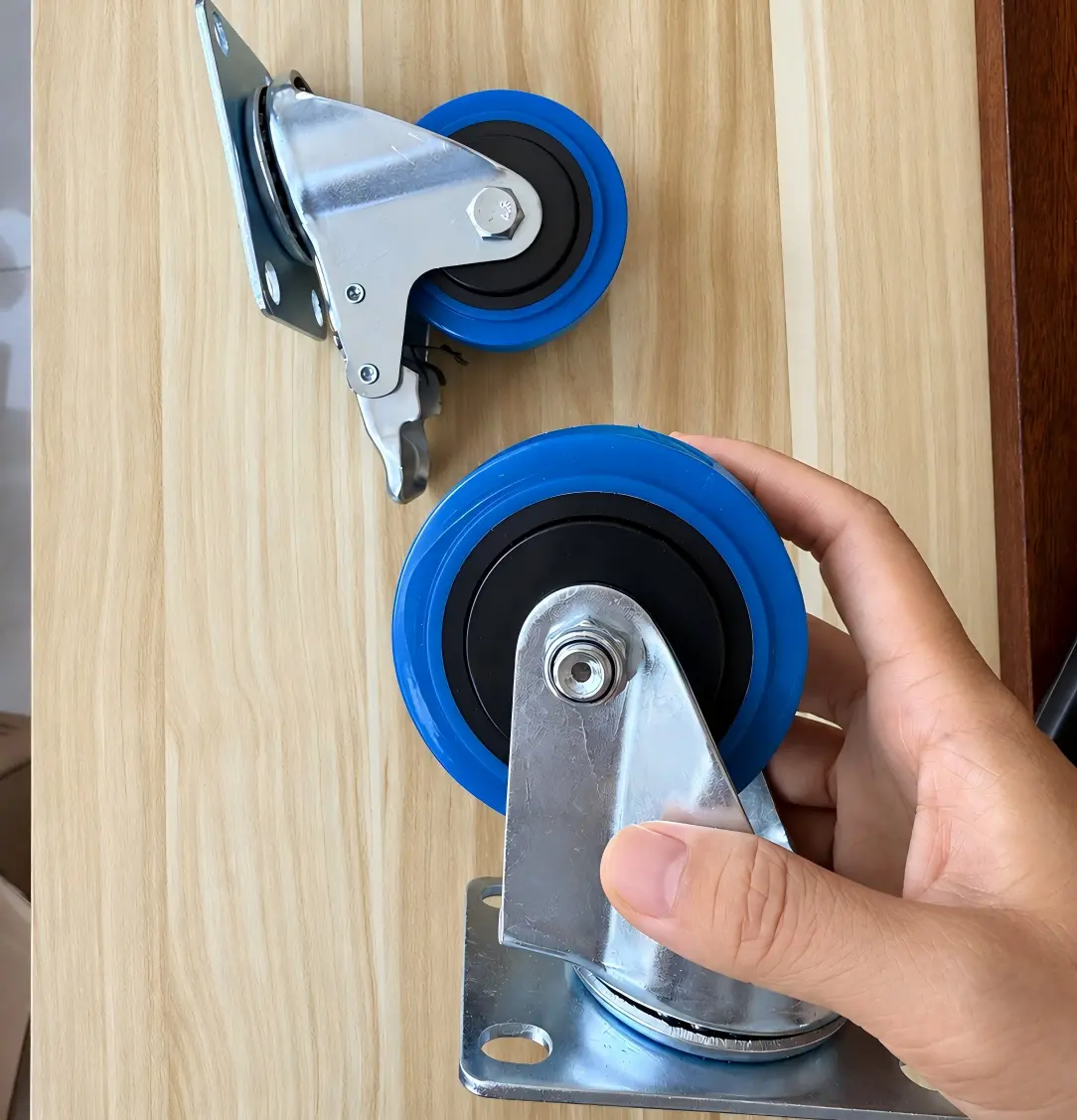
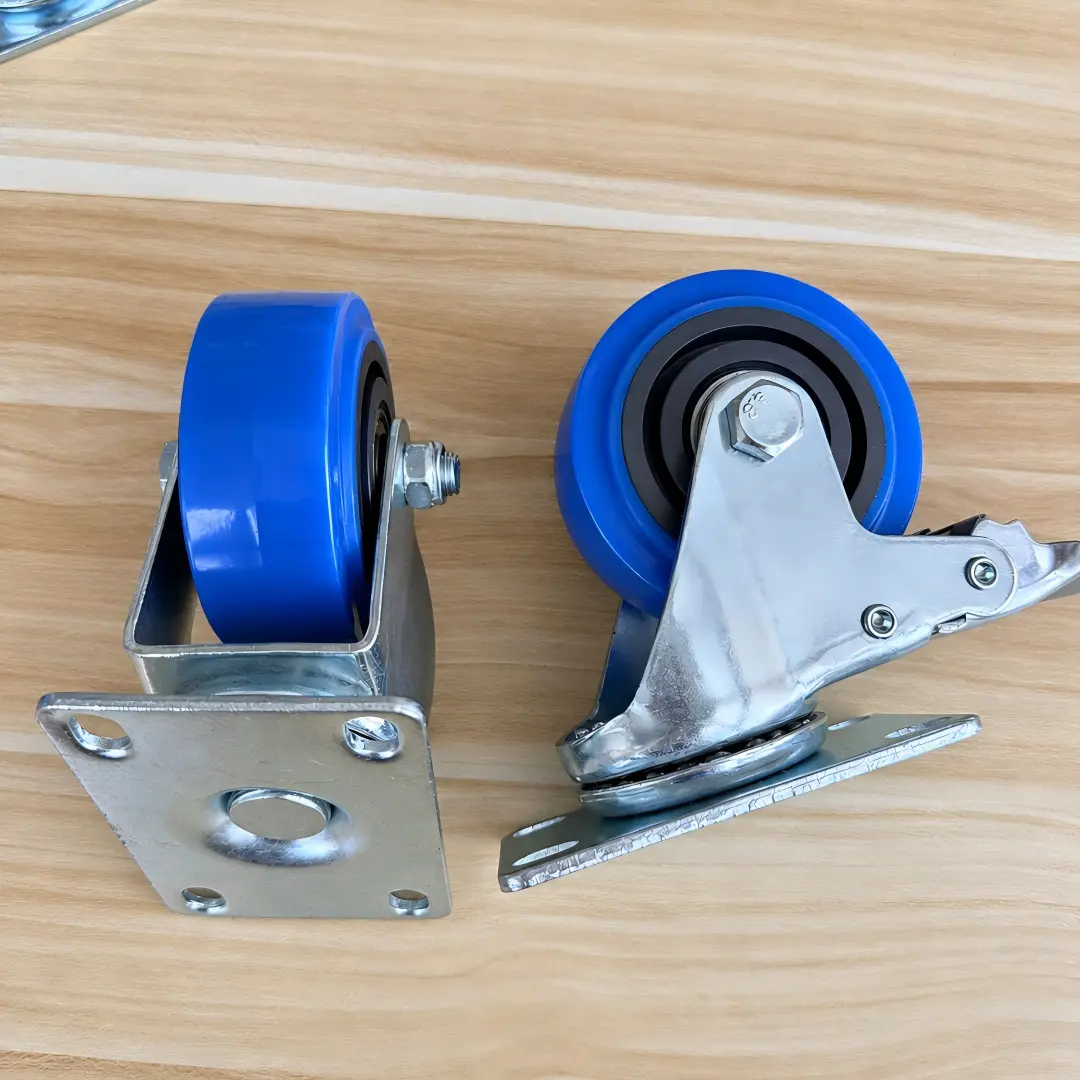
Replace the Wheel While Matching the Existing Caster Assembly
TPR replacement caster wheels are specified for buyers who need the wheel component rather than a complete fork and mounting assembly. They suit repair-part distributors, trolley manufacturers and equipment service teams working with an existing axle and bracket. Start with the wheel diameter, tread width, axle bore and hub length; then identify the bearing arrangement and required duty.
The blue TPR tread is a candidate for projects that value quieter movement, resilient floor contact and a more comfortable rolling experience. It can be used across ordinary and higher-specification equipment when the load, environment and purchasing budget are matched. Special dimensions can be developed from an original wheel sample or drawing.
Wheel-Only Ordering Sizes
Common market dimensions can be produced, and special sizes can be developed from your sample or drawing. The dimensions below are ordering options, not measurements taken from the photos. Confirm the complete assembly drawing, load rating and mounting fit before approving an order.
| Nominal diameter request | Common section or matching point | Measurements to supply |
|---|---|---|
| 2 inch / 50 mm | Compact replacement project | Width, bore, hub length and bearing arrangement |
| 2.5 inch / 63 mm | Confirm actual metric diameter | Width, bore and fork clearance |
| 3 inch / 75 mm | 32 mm tread width is a common starting point | Axle and bearing dimensions |
| 3.5 inch / 90 mm | Confirm exact diameter; 88.9 mm imperial also exists | Do not substitute on the inch label alone |
| 4 inch / 100 mm | 100 × 32 mm wheel option | Hub length, bearing position and axle bore |
| 5 inch / 125 mm | 125 × 32 mm wheel option | Spacer and fork clearance |
| 6 inch family / 150 or 160 mm | Different diameters; match the original | Wheel section and larger-hub requirements |
| 8 inch / 200 mm | 40 mm is one commercial wheel-width reference | Bearing, bore, hub length and assembly duty |
Inch labels are common trade names. Specify the required diameter in millimetres: 3, 4 and 5 inch products may be offered as 75, 100 and 125 mm, or as exact imperial dimensions. These are not automatically interchangeable.
Four Dimensions Before You Compare Prices
- Diameter: measure the wheel outside diameter and account for wear on the old tread.
- Tread width: measure the running surface separately from the overall hub width.
- Bore: identify the axle hole or bearing internal diameter and any reducer sleeve.
- Hub length: measure the axial length that fits between the fork legs, including the required bearing and spacer arrangement.
A 100 mm / 4 inch wheel does not define a European mounting dimension. Plate and bolt-hole dimensions belong to the complete caster; bore and hub fit belong to the replacement wheel. Avoid ordering from the wheel diameter alone.
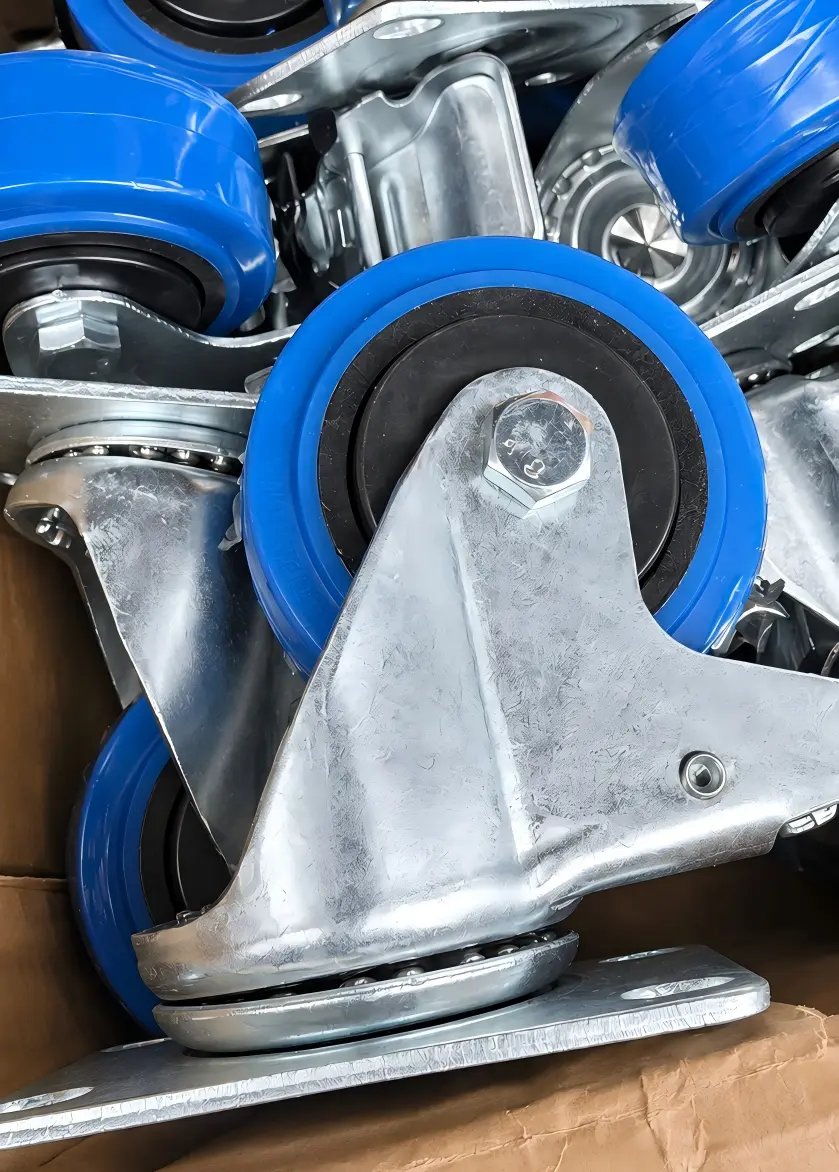
Core Material and Bearing Arrangement
| Buyer description | Clarification for a correct replacement |
|---|---|
| Plastic core / nylon hub | Plastic is a broad description. Confirm the actual core polymer and whether nylon is specifically required. |
| Double ball bearing wheel | Specify the two bearings, bore, axial spacing and spacer sleeve. |
| Roller bearing wheel | A roller-bearing hub is a different construction; confirm the axle and bearing interface. |
| Single wheel / single axle | One wheel can contain two bearings. Do not confuse bearing count with twin wheels or double axles. |
| Thread guards | Confirm the available fork space and whether guards or covers are included in the wheel-only supply. |
TPR, PU, Nylon and Hard Rubber Are Separate Choices
A sourcing request may list a “single wheel nylon rubber TPR PU” range. Those are material alternatives, not one blended product description. Polyurethane wheels, hard rubber caster wheels and cast-iron-core PU wheels have different constructions and should be evaluated against the route, floor, load and budget. Use the caster wheel material comparison when deciding whether to retain the original material or change it.
A change in tread resilience can affect pushing effort, vibration and the way the equipment sits under load. Compare an agreed sample on the actual floor, and check the remaining fork, axle and fasteners before reusing the assembly. A new wheel does not restore the rating of a damaged or worn bracket.
Replacement-Wheel Questions
Can you match a wheel from a sample without an existing drawing?
Yes. Supply the original wheel and identify the equipment, working load and any fit or noise problem to resolve. The agreed drawing should then become the reference for repeat production.
Does the replacement wheel include bearings and an axle?
State the required supply scope. A quotation can distinguish the bare wheel, wheel with bearings, spacer, axle bolt and complete caster assembly. Do not assume that all hardware is included.
Can a silent TPR hand-pushed wheel be used on a trailer?
Specify how the trailer moves, its speed and the surface. Manually moved equipment, powered towing and road trailers have different requirements; a trolley replacement wheel is not automatically suitable for each.
Related Configurations and Buying Guidance
- Compare the TPR caster wheel range
- Replace the complete rigid caster when the fork is worn
- Choose a complete swivel plate assembly
- Compare solid rubber wheels with a metal hub
- Measure TPR wheel sizes and load requirements
Request a Configuration-Matched Quotation
Send the original wheel drawing or sample, diameter, tread width, bore, hub length, bearing details, quantity and working conditions. State clearly that the request is for replacement wheels, and list any bearings or axle hardware needed.