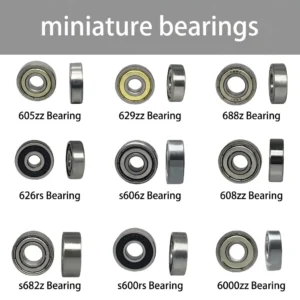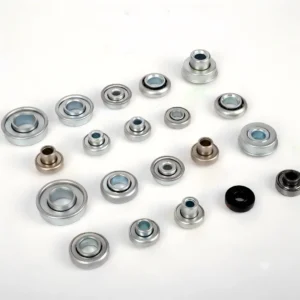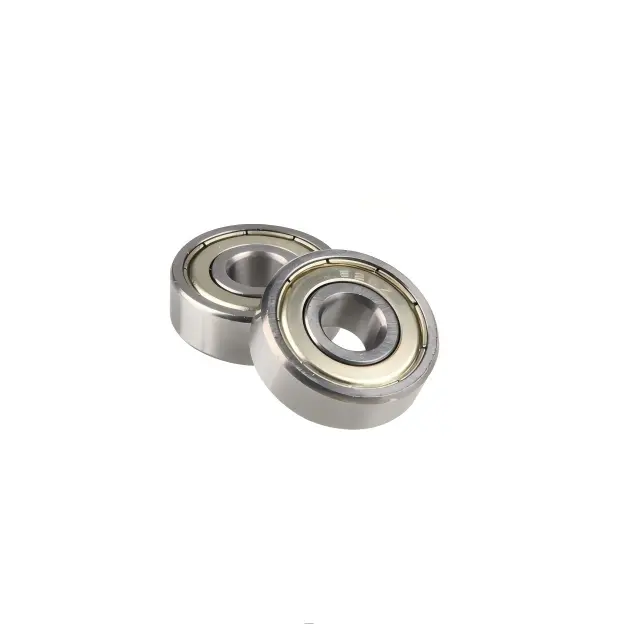
Special-dimension miniature deep groove ball bearings are developed when the required bore, outside diameter, width or ring feature falls outside a convenient standard series. This OEM route is intended for compact door hardware, instruments, small mechanisms, rollers and equipment assemblies where installation space and interface dimensions must be controlled.
When to Consider a Special Dimension
A standard bearing is normally the most economical and lowest-risk starting point. A special dimension becomes relevant when the customer cannot change the shaft, housing, total assembly width or retention method, or when an obsolete bearing must be replaced without redesigning the complete mechanism.
- The available bore or housing diameter does not match a standard boundary size.
- The assembly requires a narrow, wide or stepped ring configuration.
- An extended inner ring, flange, shoulder or locating feature is part of the interface.
- A standard bearing plus a spacer creates excessive stack-up variation.
- The replacement must fit an existing product already in the market.
Dimension and Specification Checklist
| Specification | Buyer input |
|---|---|
| Bore d | Nominal size, tolerance, shaft fit and mounting method |
| Outside diameter D | Housing size, fit, contact surface and available clearance |
| Width B | Bearing width, total stack width and shoulder positions |
| Special ring geometry | Flange, step, extended ring, sleeve, groove or locating feature |
| Internal requirement | Clearance, closure, lubricant, speed, load and operating environment |
| Order requirement | Sample quantity, forecast volume, marking, packing and inspection documents |
From Bearing Core to Finished OEM Component
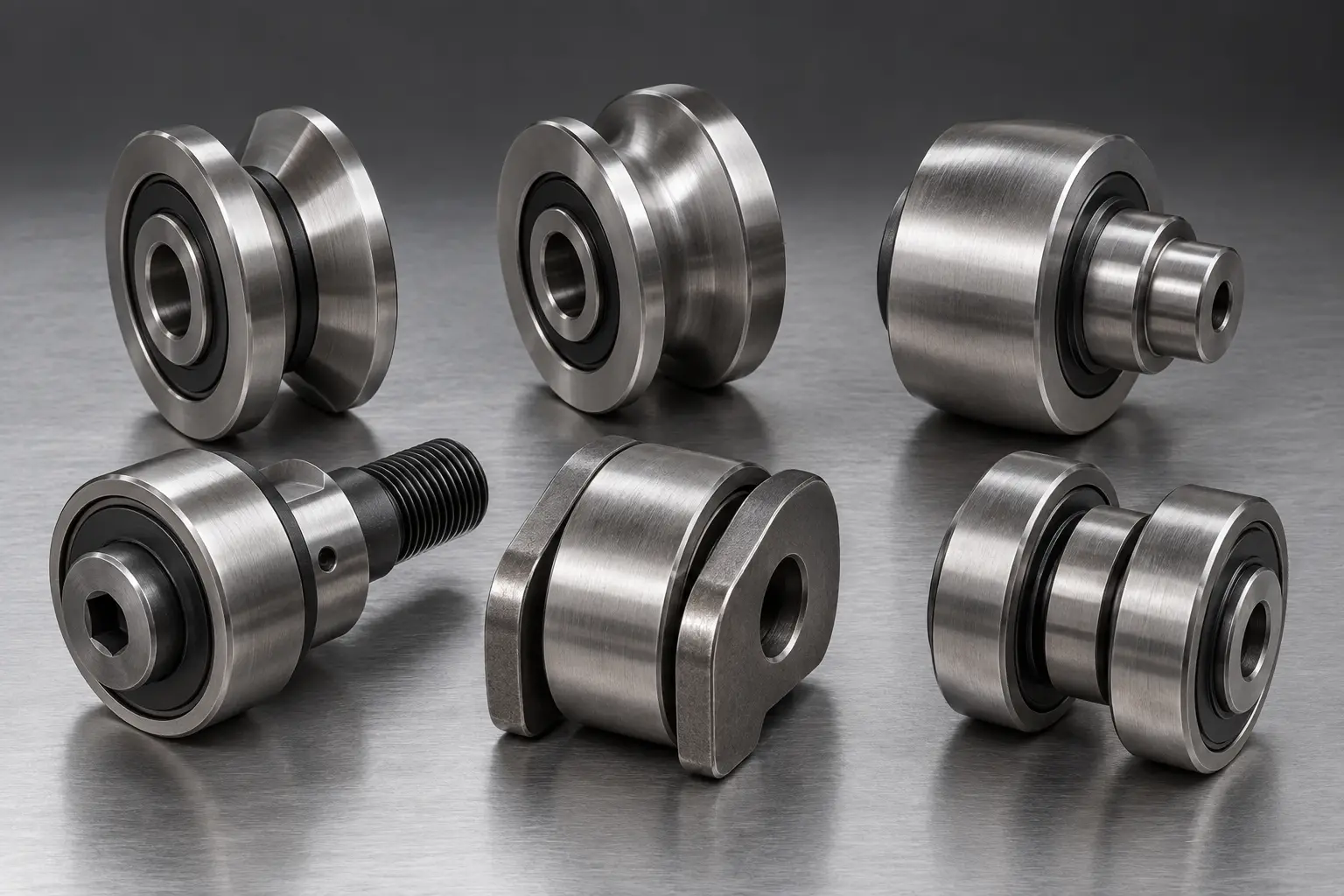
Some buyers require a bare special bearing; others need the bearing integrated into a pulley, wheel, shaft or metal housing. These are different quotation scopes. The complete drawing should identify which dimensions belong to the bearing and which belong to the finished component.
Material, Seals and Lubrication
Chrome bearing steel, stainless options, open construction, metal shields or rubber seals may be reviewed according to the application and production quantity. Clearance and lubricant must be considered with speed, temperature, contamination, noise and life requirements. A material or closure choice should not be confirmed only from a photograph.
Prototype and Repeat-Order Control
- Compare the target dimension with the nearest standard series.
- Confirm which dimensions and tolerances are genuinely non-standard.
- Review tooling, quantity and production feasibility.
- Approve a sample using the customer’s real shaft, housing or test fixture.
- Freeze the drawing, sample number, marking and packaging before repeat orders.
If a performance target is critical, state the required test method and acceptance limit. Load rating, noise level, service life and certification cannot be derived from the bearing’s appearance.
FAQ
Is every unusual size technically practical?
No. Feasibility depends on geometry, raceway design, ball complement, heat treatment, tolerances, tooling and order quantity. The nearest standard bearing should be evaluated first.
Can you quote from a hand sketch?
A clear sketch can support an initial review, but a dimensioned production drawing or verified sample is required before the specification is frozen.
What is the minimum order quantity?
MOQ depends on existing tooling, custom processing, material, inspection and packaging. It is confirmed after the drawing review.
Request a Special-Dimension Bearing Review
Send d × D × B, tolerances, special ring features, closure, material, application, sample quantity and annual demand.