
A custom deep groove ball bearing RFQ should describe the application, dimensions, fits and acceptance criteria—not only ask for a “special bearing.” For importers, distributors and OEM equipment buyers, a clear specification shortens quotation time and reduces the risk of receiving a sample that fits the drawing but fails in the assembly.
First Decide Whether a Custom Bearing Is Necessary
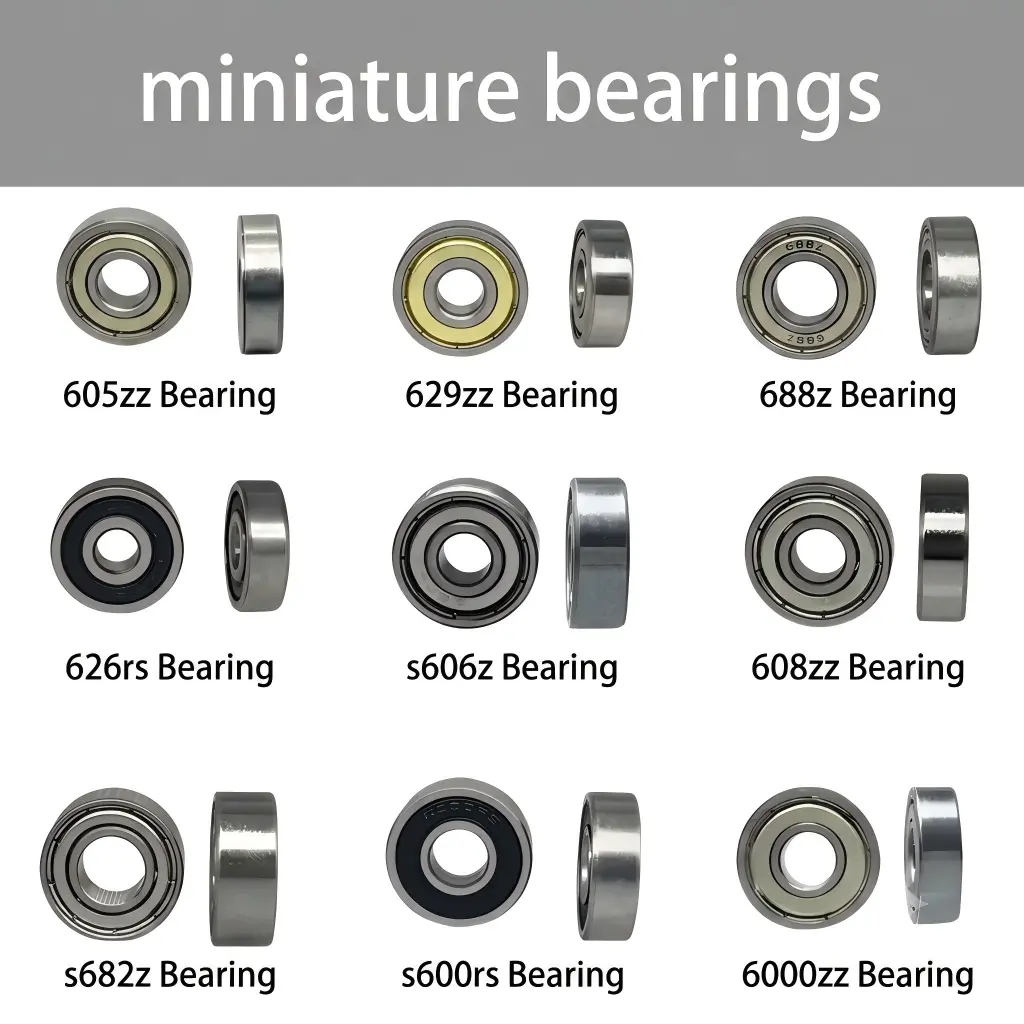
A standard catalogue bearing is normally the lowest-risk route when its dimensions, load capability and environment are suitable. A non-standard design becomes useful when the assembly has restricted space, a discontinued legacy size, special shaft or housing fits, locating features, unusual contamination, noise limits or a bearing integrated into a roller, sleeve or housing.
Before requesting new tooling, compare the requirement with our bearing and roller range. The custom and non-standard deep groove bearing series is the correct route when a standard model cannot satisfy the assembly.
The Core Drawing: d × D × B and Tolerances
Every quotation should begin with a controlled dimensional drawing. For a basic radial bearing, identify bore diameter (d), outside diameter (D) and width (B). Add corner radii, chamfers, ring offsets, flange or groove dimensions and any extended inner or outer ring. Dimensions without tolerances do not define an interchangeable part.
| Drawing item | Why the supplier needs it |
|---|---|
| Bore and shaft fit | Controls mounting, creep risk and assembly force |
| Outer diameter and housing fit | Controls location, retention and installed clearance |
| Width and axial space | Prevents interference with brackets, spacers or shoulders |
| Ring features | Defines flanges, grooves, extended rings and locating shoulders |
| Critical tolerances | Separates functional controls from non-critical dimensions |
| Datums and measurement method | Makes supplier and buyer inspection results comparable |
Do not copy every measurement from a worn sample. Wear, corrosion or deformation may hide the original geometry. If no drawing exists, provide the mating shaft, housing, track or bracket so the intended fit can be reconstructed and approved.
Describe Load, Speed and Duty Cycle
State the radial and axial loads when known, including shock or moment effects created by the assembly. Also provide operating speed, start-stop frequency and daily duty cycle. A bearing that rotates slowly under a continuous heavy load presents a different problem from a light, high-speed mechanism.
If calculated loads are unavailable, describe the complete equipment, supported mass, number of bearings, drive arrangement and failure mode of the current part. These facts allow a supplier to ask the right engineering questions without inventing an unsupported load rating.
Environment, Closure and Lubrication
Metal shields, rubber seals and open designs are not interchangeable labels. Dust, water, cleaning agents, temperature, corrosion exposure, friction and maintenance access influence the closure and lubricant choice. Specify a grease brand or fill only when the application requires it; otherwise state the operating condition and let the feasible options be reviewed.
- Clean indoor machinery: prioritize speed, friction and noise requirements.
- Door and window hardware: consider dust, moisture, low-speed cycling and long storage.
- Food, medical or chemical environments: identify applicable material, lubricant and compliance requirements before quotation.
- Outdoor or wash-down equipment: define water exposure, corrosion target and test method.
Clearance, Noise and Rotation Requirements
Internal clearance affects the bearing after press fitting and temperature change. Noise grades and running torque also need an agreed method, speed and acceptance limit. Terms such as “silent,” “high precision” or “long life” are not measurable specifications by themselves. When these characteristics matter, define the test condition or provide an approved reference sample.
Custom Bearing or Bearing-Based Component?
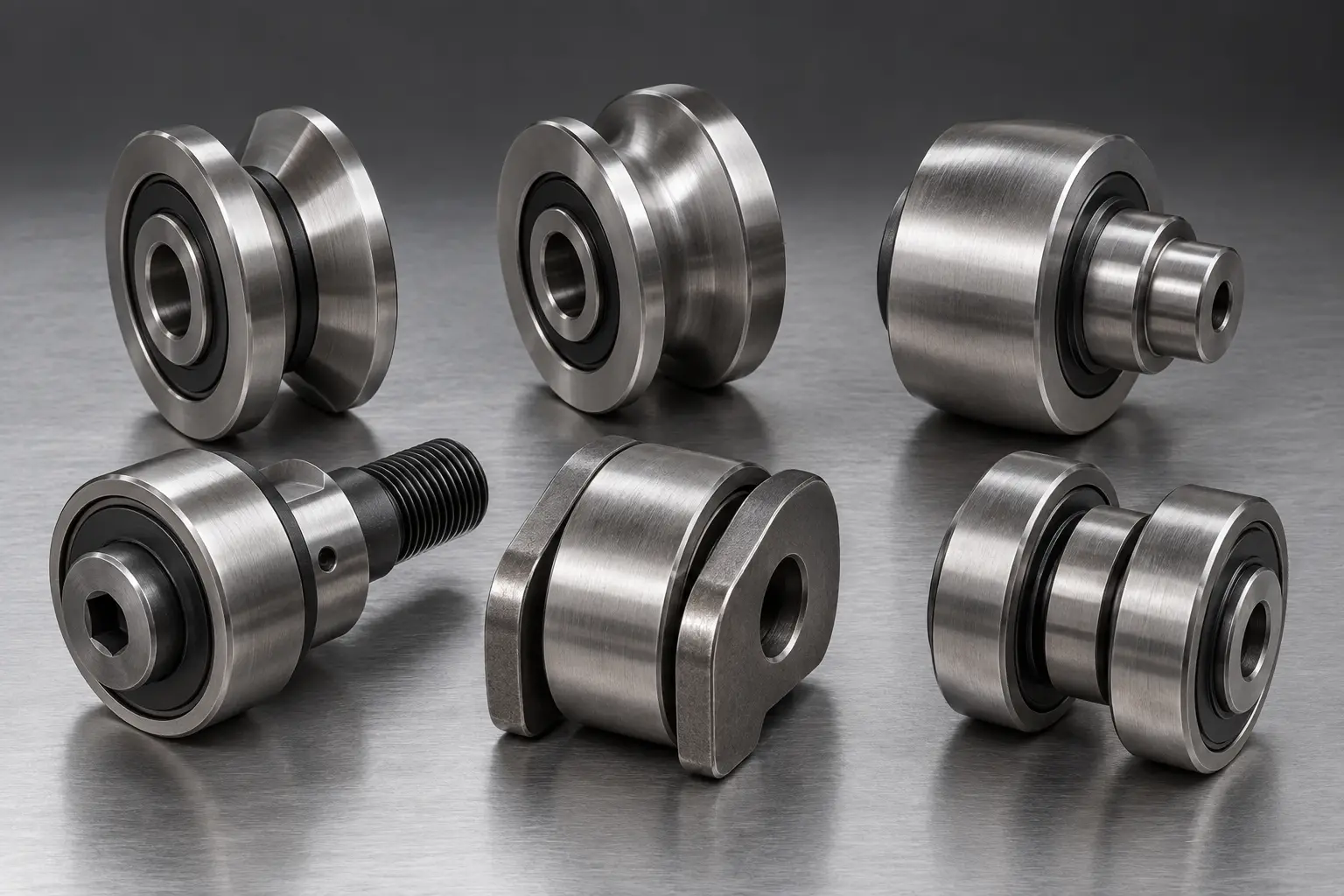
Some RFQs describe a finished pulley or roller as a bearing. Separate the bearing core from the surrounding metal, POM, nylon, PU, rubber, sleeve, shaft or bracket. A finished component needs its own outside diameter, width, groove profile, concentricity, bonding or retention requirement and installation drawing.
For architectural hardware, see our non-standard bearings for door and window systems. For limited installation space, review special-dimension miniature bearings. Machinery programs can start with custom deep groove bearings for OEM equipment.
Sample, Prototype and Approval Process
- RFQ review: drawing, application, quantity and target schedule are checked together.
- Feasibility review: compare standard platforms, modified components and new-tooling routes.
- Controlled drawing: record dimensions, materials, closures, lubricant and agreed inspection points.
- Prototype or pre-production sample: test fit and function in the buyer’s actual assembly.
- Approval freeze: identify the approved revision, sample and any deviations.
- Batch inspection: verify the agreed characteristics and retain traceable lot information.
Sample approval should include assembly testing. A free-spinning bearing on a desk may behave differently after interference fitting, preloading or integration into the finished mechanism.
Commercial Details That Affect Feasibility
Provide trial quantity, annual demand, forecast stability, destination market, required labels and packaging. Custom tooling and process controls cannot be evaluated independently of volume. If private labeling, laser marking or special documents are required, identify them before quotation.
RFQ Checklist for a Custom Bearing Manufacturer or Supplier
- 2D drawing and revision number
- d × D × B dimensions, tolerances and fits
- Load, speed, duty cycle and expected service conditions
- Temperature, dust, water, corrosion and cleaning exposure
- Material, shield/seal, clearance and lubricant requirements
- Noise, torque, runout or life test method when critical
- Mating shaft, housing, track or finished-component drawing
- Sample quantity, annual volume, marking and packing
- Required inspection report, certificate or retained sample
Common Quotation Mistakes
- Requesting a “custom 608” without explaining which feature changes
- Sending only photos with no scale or reference dimension
- Using a worn finished roller as the only dimensional standard
- Specifying marketing claims instead of measurable acceptance limits
- Changing the assembly after prototype approval without revising the drawing
- Comparing quotations that cover different materials, closures or inspection scopes
Frequently Asked Questions
Can a supplier quote from a physical sample?
A sample is useful for identification and reverse engineering, but the application and mating dimensions are needed to correct for wear and confirm the intended fit.
Does a non-standard size always require completely new tooling?
No. Some designs can use an existing platform with modified rings or a bearing integrated into another component. Feasibility depends on geometry, tolerance, quantity and performance requirements.
What should be approved before bulk production?
Approve the drawing revision, functional sample, critical dimensions, inspection method, identification and packaging. Record any accepted deviation.
Prepare Your Custom Bearing RFQ
Send your drawing or sample photos, dimensions and tolerances, application, working conditions, trial quantity and annual demand. We will review the practical standard, modified or made-to-order route.