
When comparing wire stripper pliers for a bulk order, start with the conductor sizes on the customer’s cable specification. Pliers with American Wire Gauge (AWG) markings and metric markings may look similar, but the jaw markings use different units.
Read the Markings Before Selecting a Model
A lower AWG number indicates a larger conductor. Metric specifications may use cross-sectional area in mm² or diameter in mm. Check the units on the tool drawing and the conductor specification before matching them.
Ask whether the stripping capacity applies to solid or stranded wire. A manufacturer may list a different range for each, as shown in Klein Tools’ wire stripper specifications. The KNIPEX electrical tools catalogue includes examples of stripping capacities listed in mm² and AWG.
Specify a Wire Stripper for Bulk or OEM Orders
Review the AWG-marked wire stripper pliers for an AWG-based assortment or the gray-handle metric-marked wire stripper pliers for a metric-based assortment.
Send the conductor sizes and material, whether each wire is solid or stranded, a representative sample, and the desired package language. Agree on the jaw markings and sample fit before finalizing a blister card or carton label. If the assortment includes a crimping profile, specify the terminals separately.
Frequently Asked Questions
Is a marking in mm the same as mm²?
Millimetres measure diameter or length, while square millimetres measure cross-sectional area. Confirm the unit before matching a stripping notch.
Can one marked range cover both solid and stranded wire?
Check the specific tool’s range for each conductor type and confirm it against the wires your customers use.
Related Products
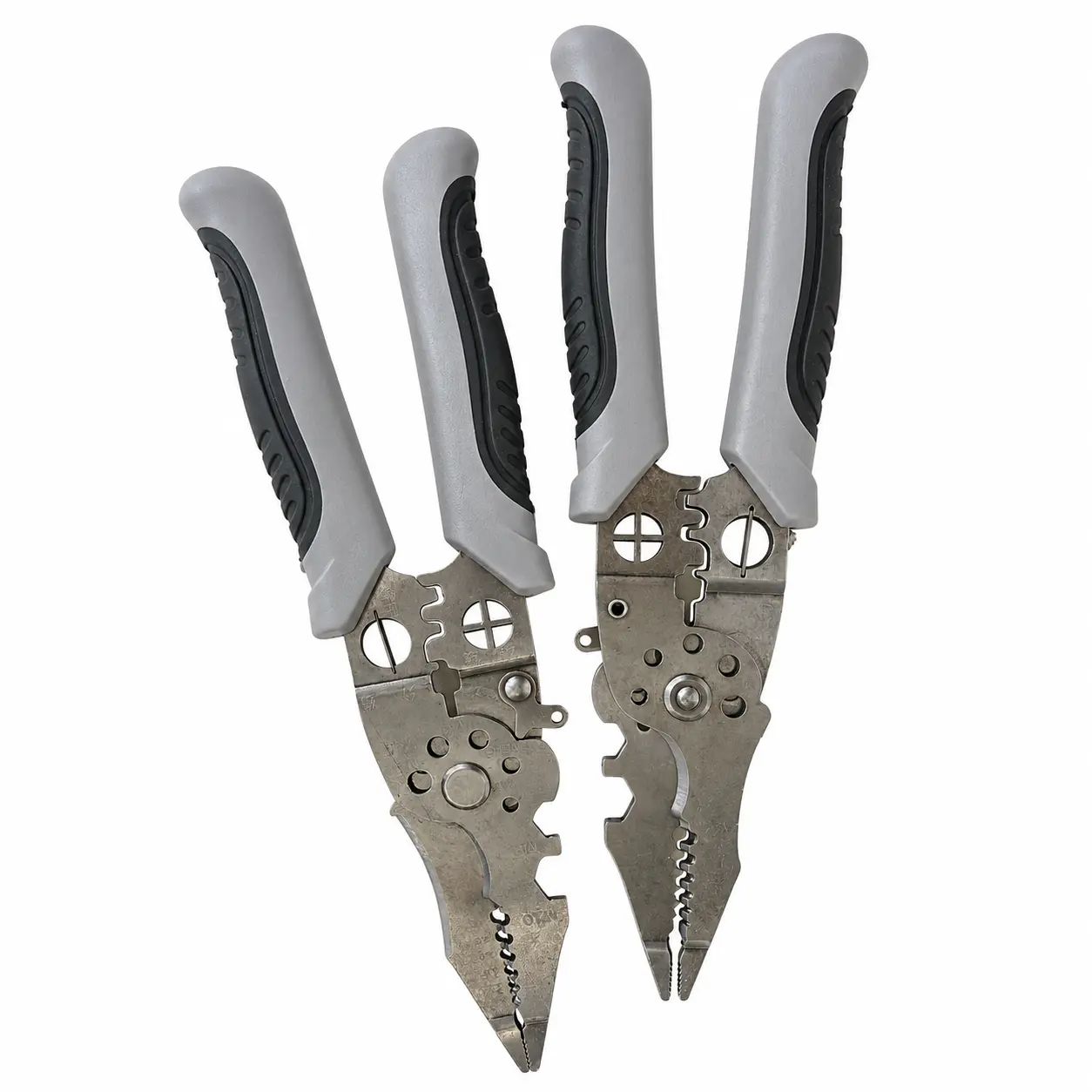
OEM Metric Multifunction Wire Stripper Pliers
Gray-handle model with metric-marked stripping notches.
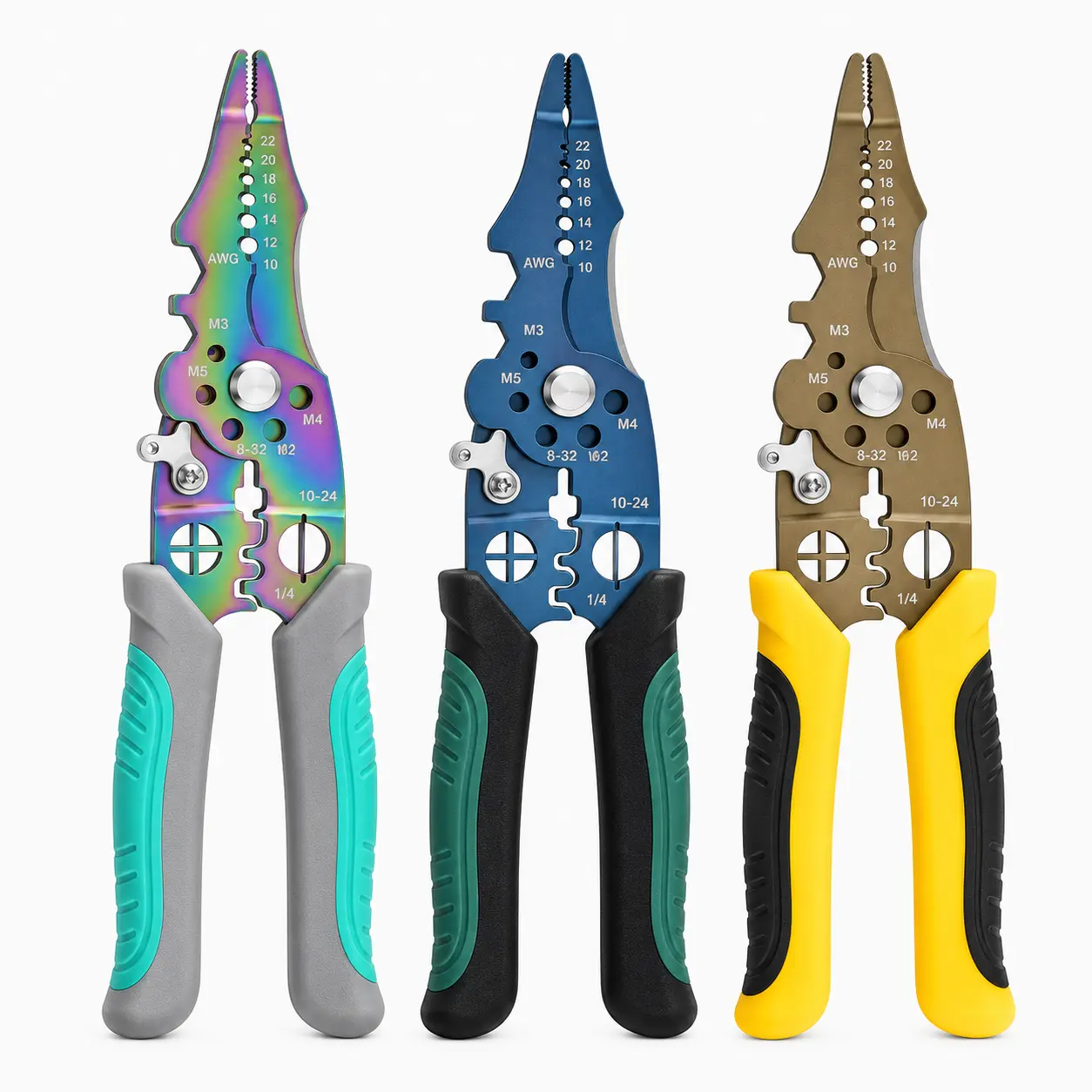
OEM AWG Wire Stripper Crimper and Cutter Pliers
AWG-marked model with multiple finish options.
Browse Construction & Electrical Tools or read Wire Stripper Pliers for Building Renovation.