
A PU foam gun is easier to maintain when fresh residue, a normal work interruption and a cured internal blockage are treated as three different situations. One generic instruction to “clean it later” does not deal with all three. Nor does a black finish or an easy-clean sales label tell the user how the valve and can connection should be handled.
This guide is for can-fed, gun-grade expanding-foam applicators. The selected applicator instructions, foam data sheet and cleaner safety data sheet govern the actual procedure. It is not a maintenance guide for a hot-melt glue gun or two-component spray-insulation equipment.
Fresh Foam and Cured Foam Need Different Decisions
Sika’s foam-cleaner information identifies uncured foam as the cleaning target. Soudal’s applicator instructions call for attention to the tip during interruptions and cleaning when finishing. Together, these references support a useful maintenance principle: organise cleaning before residues become an internal cured obstruction.
Do not assume a cleaner marketed for wet foam can restore a blocked internal passage after cure. An externally accessible tip on a tool with a dedicated cleaning feature is a different situation from cured foam inside the valve or barrel. Use the tool’s service instructions to decide whether a part can be serviced or the applicator should be replaced.
| Situation | Useful decision | Mistake to avoid |
|---|---|---|
| Fresh residue on the exterior | Use the approved cleaning procedure and check cleaner/substrate compatibility | Waiting until the residue has cured, then attacking the sealing area |
| Short pause between applications | Follow the specified closure and tip-care procedure for the selected system | Assuming that an adjustment knob creates unlimited storage life |
| End of work or a longer interruption | Follow the stated can-handling, cleaning and storage procedure | Removing a can and leaving a foam-filled applicator open without instructions |
| Suspected cured internal blockage | Use the specified inspection, service or replacement route | Forcing the trigger, improvised reaming or dismantling a pressurised assembly |
A Maintenance Workflow for the User’s Instructions
- Identify the system. Keep the applicator model, foam reference and approved cleaner together in the instructions. Check the actual connection; a can-size description alone is insufficient.
- Prepare the work area. Protect adjacent finishes and follow the cleaner safety data sheet for protective equipment, ventilation and ignition precautions. Solvent compatibility matters on decorative surfaces.
- Deal with fresh external residue promptly. Use the specified cleaner or method on the relevant surfaces. Keep dirt and cured deposits away from the adapter and nozzle sealing areas.
- Choose the correct interruption procedure. A short pause may have a different closure and tip-care routine from taking the tool out of service. Use the interval and storage conditions stated by the selected foam and gun instructions.
- Flush only by the approved procedure. Where the system calls for an attached cleaner can, confirm that cleaner and connection are appropriate. Direct discharge and collect waste as instructed; do not improvise the sequence.
- Store and inspect. Use the prescribed storage arrangement and check for damage before reuse. Apply the maker’s pressure-management procedure before any permitted service work.
The point of this sequence is not to impose a universal flushing time or storage period. It is to make sure the operator has an instruction for each decision, rather than filling a gap in the manual with a habit learned on another tool.
What PTFE and “Quick Clean” Actually Tell a Buyer
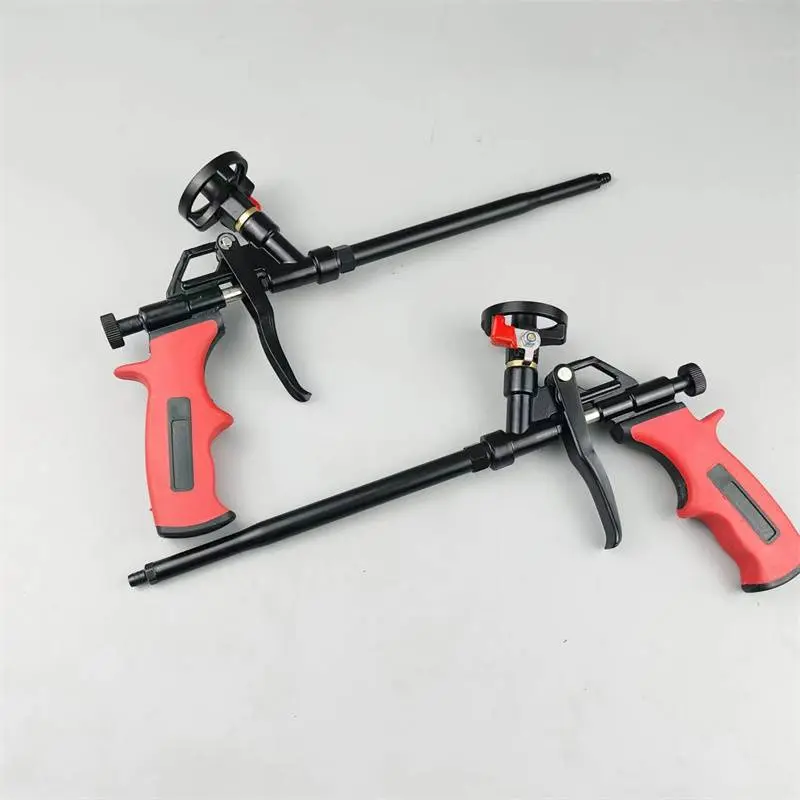
A coating requirement should name both the material and the coated components. illbruck’s AA270, for example, lists its PTFE-covered parts. That is more useful for specification than treating every black surface as the same finish.
Sika’s heavy-duty applicator literature describes a particular easy-clean tip feature. It does not follow that every PU foam gun can safely be cleaned in the same way. When sourcing an OEM model, ask which surfaces or serviceable parts are covered by the claimed feature and request the matching instruction sheet.
For the black-finish foam gun, send the required coating coverage with the RFQ. For the orange-handle configuration, agree the selected can connection, cleaning compatibility and instruction format. Appearance should help customers identify the catalogue option, not replace a component specification.
Troubleshooting: Check the System Before Blaming the Gun
| Reported symptom | First information to collect | Decision boundary |
|---|---|---|
| Little or no flow | Can condition, correct can/adapter engagement, adjustment position and visible tip residue | Do not keep forcing the trigger. If the prescribed checks do not resolve it, follow the service route. |
| Flow does not stop as expected | The stated adjustment/shut-off procedure and external residue or damage | Follow the safe isolation procedure; do not disassemble a pressurised body. |
| Leakage at the can connection | Specified valve/adapter match and the condition of contact surfaces | Stop and use the system’s safe handling procedure. A mismatched or damaged connection is not solved by excessive tightening. |
| A cleaning complaint after storage | Which foam, cleaner, interruption period and storage procedure were actually used | Review the handling record before classifying the cause as a coating or manufacturing defect. |
For Importers: Put Maintenance into the Sample Approval
Run the evaluation with the foam and cleaner your customers will use. Record the references, working conditions, agreed interruption routine and observation method. Confirm that the instructions supplied with the retail unit describe the selected configuration. A generic leaflet referring to a different valve or cleaning feature can create avoidable complaints.
Include a clear product identifier, operating and storage instructions in the required language, packing scope and a supplier contact route. If a consumable or coating changes during repeat supply, review the instruction sheet as well as the tool. An applicator, its compatible consumable and its maintenance instructions should be treated as one approved supply configuration.
Use the foam gun vs caulking gun buying guide to prepare the hardware specification, or return to the applicator range to select a model for sample review.
Frequently Asked Questions
Can I leave the foam can on the gun overnight?
Follow the selected foam and applicator instructions. Some systems permit an attached can during a defined interruption, but the closure method, storage conditions and allowed interval are product-specific.
Will foam cleaner dissolve a cured blockage inside the gun?
The cleaner references discussed here are intended for fresh, uncured PU foam. Do not assume that flushing will recover an internal cured blockage. Follow the tool maker’s service or replacement route.
Does a PTFE foam gun need no cleaning?
No universal no-cleaning claim follows from a PTFE coating. Coating can assist maintenance on specified surfaces, while the selected gun’s nozzle, valve, adapter and cleaning instructions still matter.
Can I clear the valve with a drill or sharp metal tool?
Do not improvise internal reaming or dismantling, particularly on a pressurised assembly. Follow the applicator’s service instructions and safe pressure-management procedure; use the supplier’s repair or replacement route when necessary.
Manufacturer References
- Soudal PU Foam Gun DIY: interruption and cleaning instructions
- Sika Boom Foam Cleaner: fresh foam and cleaner use
- illbruck AA270: component-specific PTFE coverage
- Sika heavy-duty foam applicator: a model-specific easy-clean feature
These references apply to the manufacturers’ own systems. Use the instructions for the exact applicator, foam and cleaner selected for your order.
Related Products
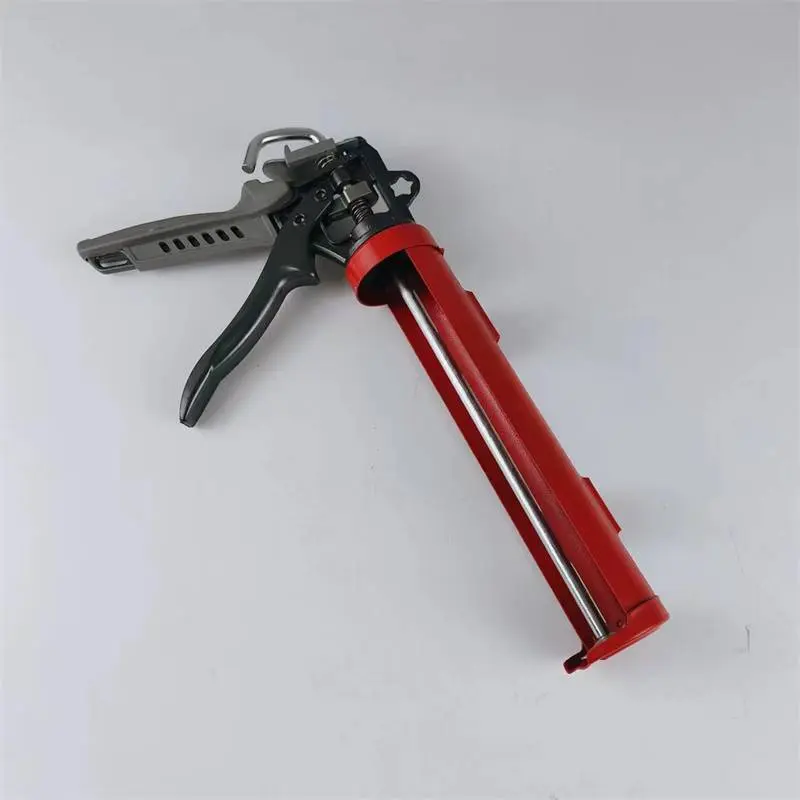
Manual Cartridge Caulking Gun
For rigid-cartridge sealant and adhesive selection.
Black-Finish PU Foam Gun
For gun-grade expanding foam and OEM packing projects.
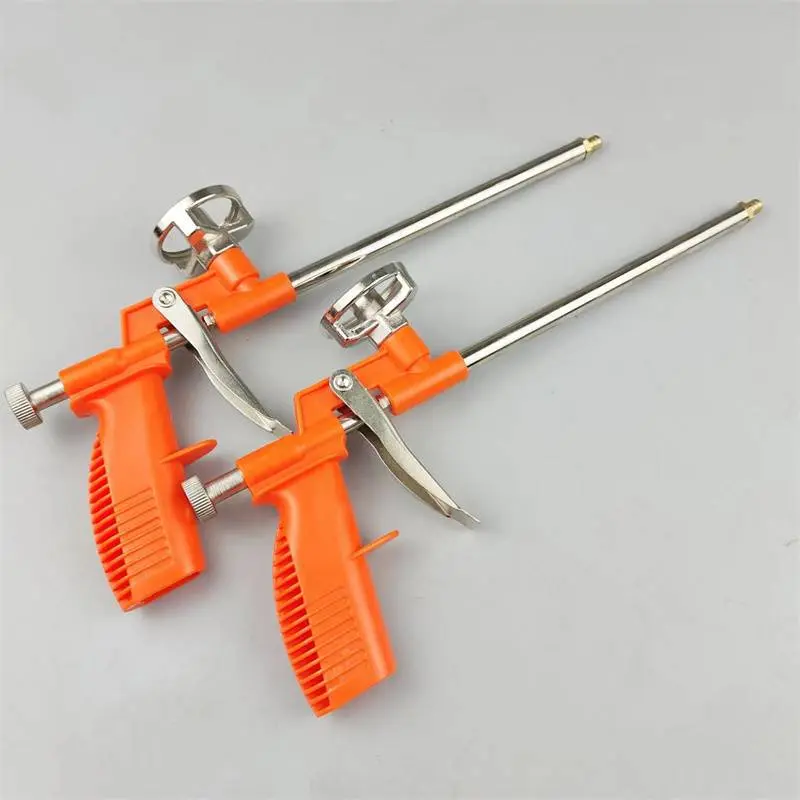
Orange-Handle PU Foam Gun
For conventional foam-applicator and distributor supply programmes.
Request a Foam Gun Sample and Specification Review
Send the tool photo or drawing, foam-can or cartridge details, required quantity, packing and destination. Ask about free samples; sample scope and shipping arrangements are confirmed individually.