
Choose the applicator by what feeds it, not by the word “gun” in a supplier title. A manual cartridge caulking gun pushes a plunger into a rigid sealant cartridge. A PU foam gun connects to a compatible gun-grade expanding-foam can and meters material through a barrel. The two tools can appear in the same construction catalogue, but they are not interchangeable.
For an importer or private-label buyer, the expensive mistake is often an unclear specification: the tool arrives in the right colour but does not match the customer’s consumable, installation access or maintenance routine. This guide gives you a sequence for separating those decisions before comparing quotations.
1. Separate the Two Dispensing Systems
| Buying question | Cartridge caulking gun | PU expanding foam gun |
|---|---|---|
| Supply format | Rigid sealant or adhesive cartridge | Compatible gun-grade PU foam can |
| Operating principle | Trigger advances a push rod and plunger | Trigger and adjustment mechanism control flow from the attached can |
| First compatibility check | Cartridge length, diameter, seating and plunger travel | Can valve, adapter engagement, sealing contact and clearance |
| Main selection question | Will the drive suit the material and the user’s hand-force requirement? | Will the can interface and valve/adjustment arrangement work reliably together? |
| Typical RFQ confusion | Volume is given without cartridge dimensions | Can volume or barrel length is treated as proof of connection compatibility |
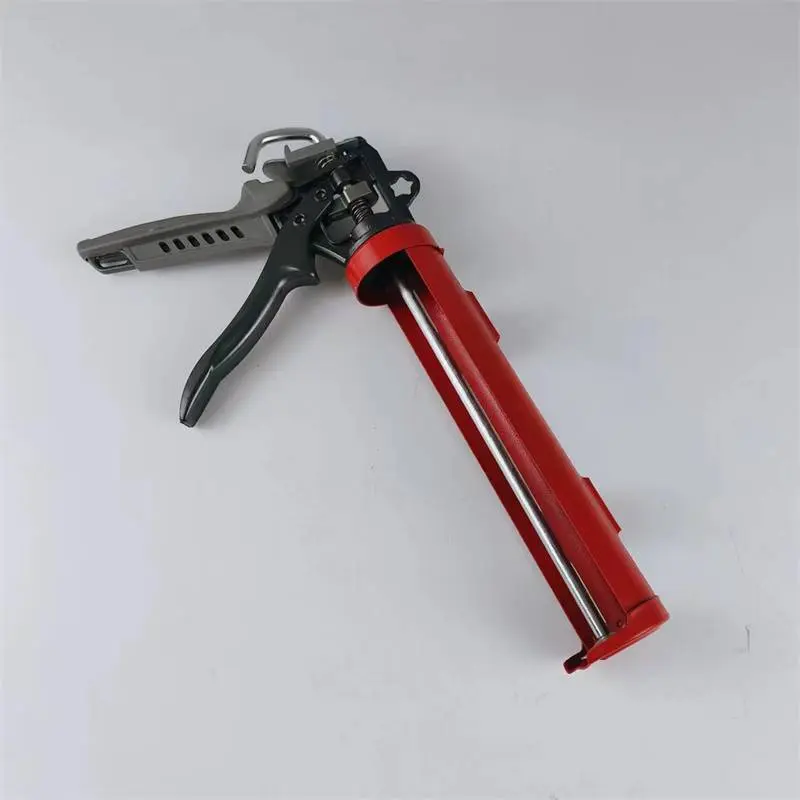
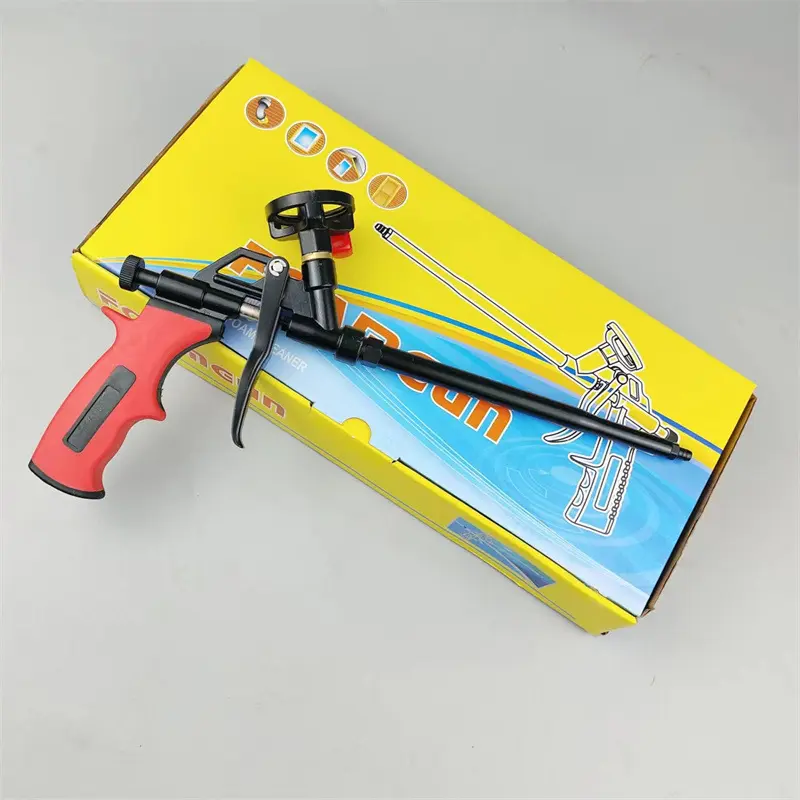
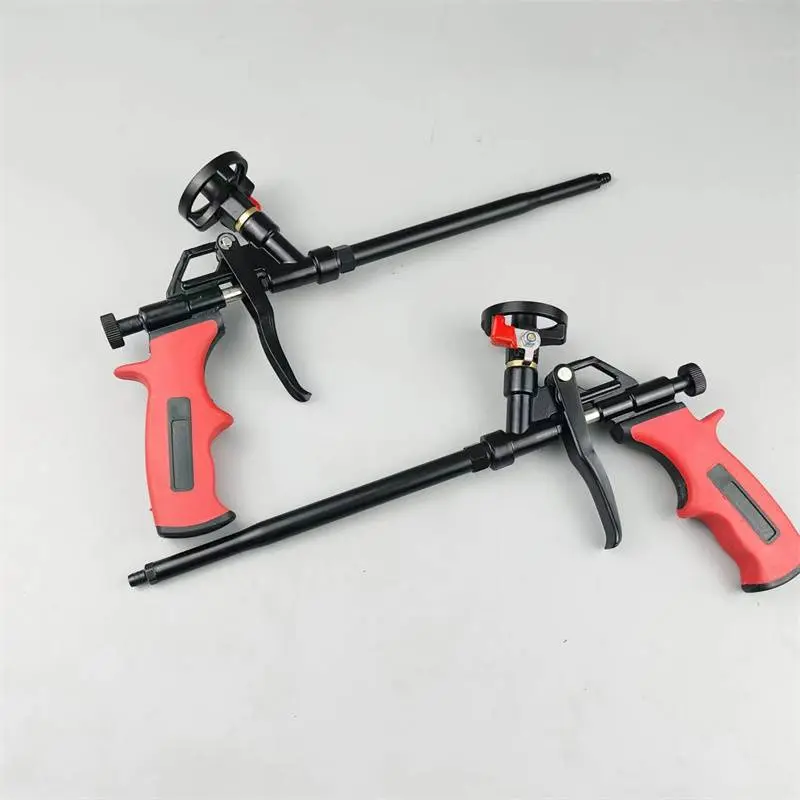
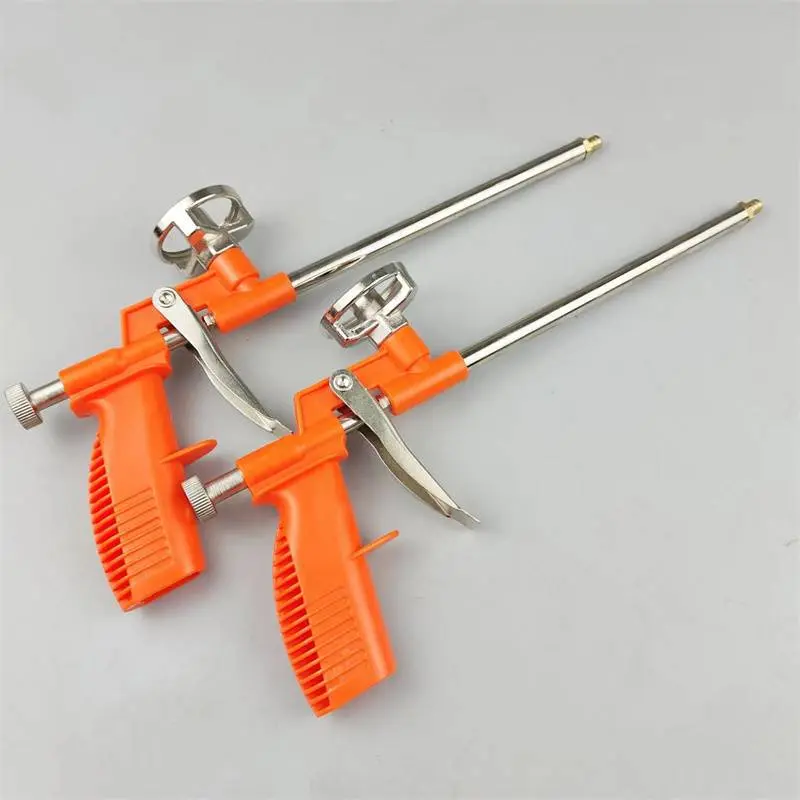
| Range example | Red-frame manual cartridge caulking gun | Black-finish PU foam gun or orange-handle applicator |
2. Turn Size Labels into Measurable Interfaces
For a cartridge tool, request the cartridge body drawing and holder envelope. COX’s EasiFlow HD is a published example of a dispenser specified for 310/400 ml cartridges; its catalogue gives separate dimensional information. Those are manufacturer-specific references, not dimensions or capacity claims for the red-frame tool pictured here. The lesson for an RFQ is to record both volume and physical fit.
For a foam tool, ask for a clear photograph or drawing of the actual can valve and mounting connection. “800 ml foam gun” describes a requested can programme, not a universal interface. Check that the can can engage correctly without striking the handle or other parts in the intended working orientation.
Length also needs a named reference. If an enquiry says “9-inch foam gun”, clarify whether that means the barrel, the exposed reach or the entire tool. Nine inches equals 228.6 mm, but that conversion alone says nothing about the can connection or tip design.
3. Compare Drive, Flow Control and Cleaning as Separate Choices
Cartridge dispensers are offered with different thrust and mechanical-advantage specifications. COX publishes different ratios within its manual range. Use such figures to ask better questions, then test the chosen tool with the intended material, nozzle opening and stated application conditions. A tool that feels acceptable with one sealant may not be comfortable with a more resistant adhesive.
For a PU foam applicator, make the sample trial answer specific questions: does the adapter engage correctly, does the trigger return, does the rear adjustment produce a usable change, and does the selected shut-off arrangement behave as agreed? Record the can and foam used in the trial, so a repeat order can be compared with the same reference.
PTFE is a coating specification, not a colour. illbruck’s AA270 documentation identifies both the coating and the coated components. For an OEM programme, similarly define whether the requirement covers the adapter, body, rod, barrel or nozzle. Do not turn “black finish” into “fully PTFE-coated”, and do not turn “easy clean” into a universal no-cleaning promise.
4. Write an OEM Factory Brief That Different Suppliers Can Quote
When comparing a foam gun manufacturer, factory quotation or sourcing supplier, send every candidate the same brief. Otherwise one quote may include a printed box and selected coating while another covers only a bare conventional applicator. The lowest unit figure is not a like-for-like comparison until those differences are visible.
| RFQ section | Information to provide |
|---|---|
| Consumable | Can valve/connection details or cartridge drawing, material reference and intended market |
| Tool geometry | Named barrel or holder dimensions, reach, tip requirements and grip preference |
| Components and finish | Body material by component; coating type and coverage; requested colour |
| Sample acceptance | Interface fit, operating movement, dispensing trial and the agreed shut-off check |
| Commercial scope | Quantity by configuration, sample request, logo artwork and required documents |
| Packing | Bare tool, polybag or box; instructions, barcode, carton count and assortment |
| Repeat-order control | Approved sample, controlled drawing or specification, and agreed inspection points |
Keep the drawing revision and packing artwork revision with the sample approval. If a component or coating changes later, review that change before treating the new batch as equivalent. This helps the buyer and supplier discuss a real difference rather than arguing about the broad term “professional grade”.
5. Build the Range Around the Customer’s Work
A distributor selling cartridge sealants needs a clear cartridge-tool option. A buyer selling gun-grade expanding foam needs matched applicators and a sensible cleaner/instruction plan. If you offer both, keep the two product names and images distinct so customers do not order an applicator for the wrong consumable.
Qingdao Gleam Hardwares can review conventional and custom OEM requirements against your sample or drawing. Start with the caulking and PU foam gun range, then send the interface details and quantity for the selected tool. For the maintenance part of your range brief, read how to clean and store a PU foam gun.
Frequently Asked Questions
Is “foam caulking gun” a precise product specification?
Not by itself. Identify whether the buyer means a can-fed PU expanding foam applicator or a push-rod cartridge sealant gun, then specify the consumable connection and dimensions.
Does a larger foam can require a longer foam gun?
Can fill volume and barrel reach are separate requirements. Check the can valve, adapter, physical clearance and intended working orientation, then choose reach for the actual installation detail.
Should I choose a gun only by its thrust ratio?
For a cartridge dispenser, consider the ratio together with the required dispensing force, cartridge fit, material behaviour, nozzle and hand-force trial. An unverified ratio is not a substitute for testing the intended combination.
What is the most useful sample to send for OEM sourcing?
Send the existing tool and the intended cartridge or can, or supply dimensioned drawings of both interfaces. Include the required packing format and practical acceptance checks.
Technical References
The following manufacturer references explain their own products and general selection principles; their ratings, approvals and dimensions are not specifications for Gleam’s pictured tools.
Related Products
Manual Cartridge Caulking Gun
For rigid-cartridge sealant and adhesive selection.
Black-Finish PU Foam Gun
For gun-grade expanding foam and OEM packing projects.
Orange-Handle PU Foam Gun
For conventional foam-applicator and distributor supply programmes.
Send Your Applicator Sourcing Brief
Send the tool photo or drawing, foam-can or cartridge details, required quantity, packing and destination. Ask about free samples; sample scope and shipping arrangements are confirmed individually.