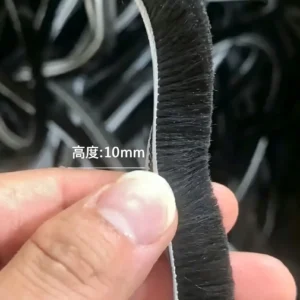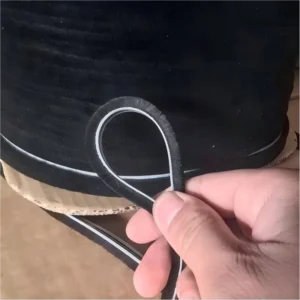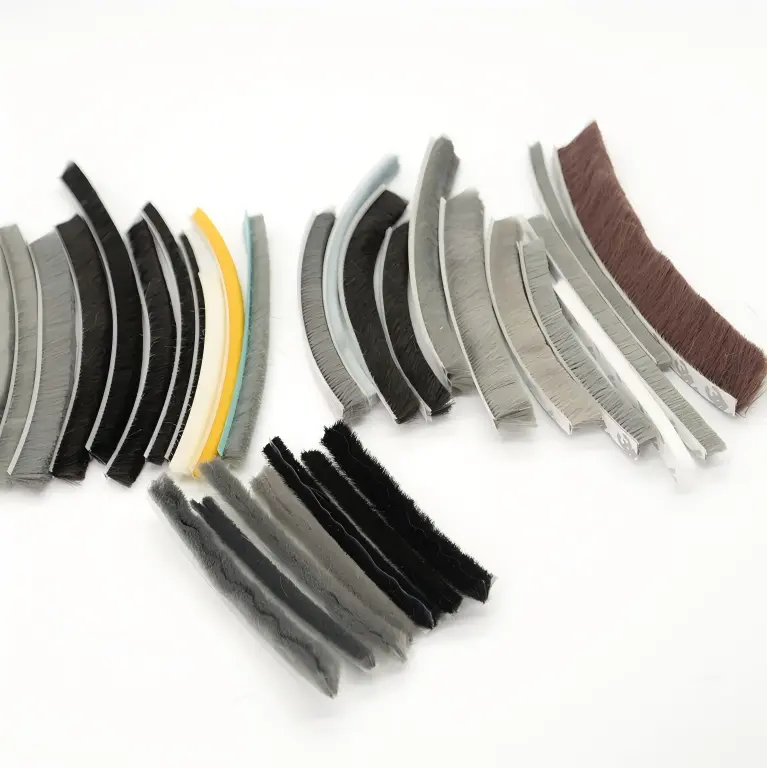
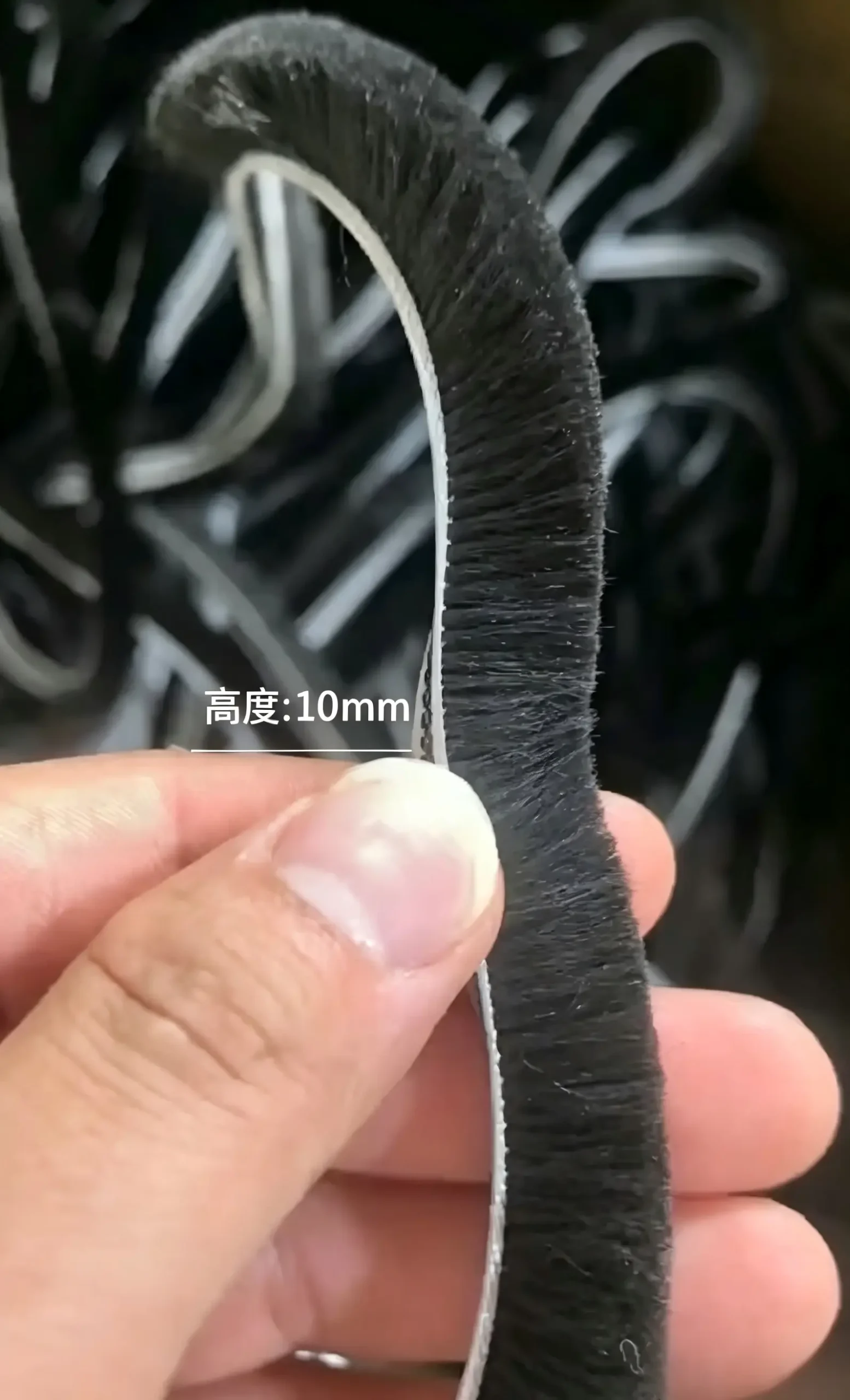
High-density brush seal for sliding wardrobes and cabinets uses closely spaced pile at overlapping doors and frame-side gaps. Furniture-hardware importers and cabinet manufacturers should specify both fiber coverage and operating resistance: a fuller brush is useful only when the door still travels correctly.
This brush seal supports indoor dust control and soft contact. It is separate from a tall door-bottom brush and from a fin-pile seal specified for an exterior sliding-window interface.
Choose pile coverage against the real wardrobe gap
Start with the gap at the overlapping door edge or frame side. Check several points along the travel path, including the most open and most compressed positions. A strip that loses contact at one end leaves a dust path; a strip that is heavily bent at the other end may add drag or touch the rollers.
“High density” should refer to an agreed sample or measurable construction, not merely a darker product photograph. When comparing suppliers, keep backing width, pile height and compression the same. Then compare coverage, recovery, fiber retention and actual door movement.
| Selection point | Wardrobe and cabinet requirement |
|---|---|
| Mounting route | Insert into the existing frame groove or specify an adhesive-backed version for a suitable flat surface. |
| Contact position | Overlapping sliding-door edge, frame side or a compatible cabinet opening; provide an installation photo. |
| Pile construction | Dense PP brush pile matched to the approved sample; specify fin or treatment only if required. |
| Dimensions | Backing width and thickness, pile height, total height and working gap recorded separately. |
| Appearance | Black, grey/gray, white, brown or a reviewed matching shade for the furniture finish. |
| Density control | Agreed construction or retained sample; compare at equal height and equal gap. |
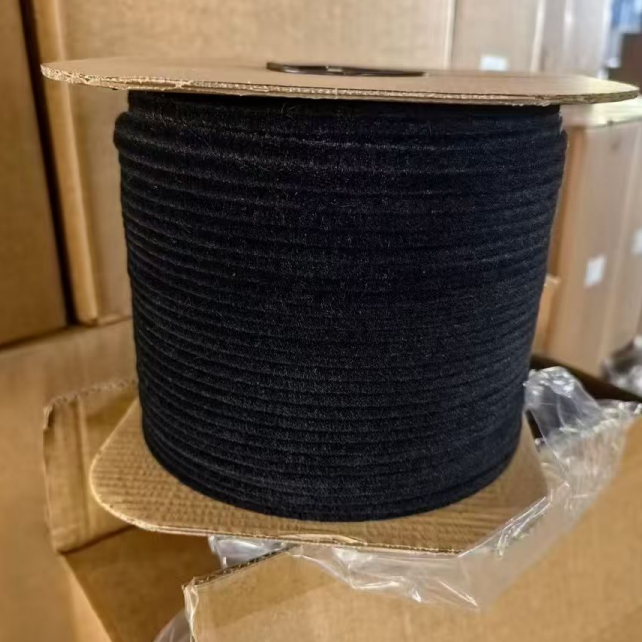
| Packing | Cut lengths or rolls, size labels and carton separation suited to the assembly line or distributor. |
| Order approval | Sample trial covering travel, closure, fiber appearance and backing retention or adhesive fit. |
Wardrobe, cabinet and frame-side applications
A brush window sealing strip may resemble a wardrobe dust seal, but the selection priorities differ. For a household sliding wardrobe, confirm the door overlap, finish and quiet movement. For a commercial cabinet or display enclosure, add cleaning and visibility requirements. For a window frame, check exposure, drainage and the profile’s sealing design.
Buyers may request a household plush seal strip, felt brush or dustproof wool pile for these wardrobe and cabinet applications. The quoted product should still identify PP pile, mounting method and actual dimensions. Dust control depends on continuous contact around the enclosure; an open vent or an unsealed corner remains a path for dust.
Installation and sample approval
- Record the frame section, door overlap and minimum/maximum clearance.
- Identify a retaining groove or a flat bonding area.
- Install a trial length without stretching the backing.
- Move the door through its complete travel and check the handle effort and closing position.
- Inspect whether the pile brushes any roller, guide, latch or floor component.
- Retain the approved sample and specify the cut-length or roll-label format.
Questions from furniture-hardware buyers
Will a denser brush always keep out more dust?
Not if the backing does not fit or the brush misses the opposing face. Contact, corner coverage and the enclosure design matter alongside density.
Can it reduce rattling or contact noise?
A correctly positioned brush can provide soft contact, but it is not a rated soundproofing system or a load-bearing bumper. Resolve loose rollers, guides and misalignment separately.
Should I choose a self-adhesive strip?
Choose that route only if the finish offers a suitable bonding surface. Trial adhesion on the actual coating. An existing insertion channel usually calls for a correctly matched groove-in backing.
Can different sizes be packed under one brand?
Provide the size list, quantities, label artwork and packing sequence. Keep each size and construction clearly identified so installers do not mix similar-looking strips.
B2B ordering information
Request the price against an approved size and density reference, order quantity, roll or cut length, labeling and destination. A wholesale price without those details may compare different pile constructions or packing units. Sample terms and delivery timing are confirmed with the quotation.
Standard dimensions and custom production
Common market sizes can be produced. Special backing widths, pile heights and lengths can be manufactured from your sample or drawing. State the mounting method and height convention with each size; the same nominal width and height do not make different backing profiles interchangeable.
Request a B2B quotation
Send the wardrobe or cabinet installation photo, gap, backing dimensions, density reference, color and required quantity.
Email: [email protected]
WeChat / WhatsApp: +86 19053267096