
Fin pile and siliconized pile describe different properties. A fin is a barrier built into the brush structure; siliconization is a treatment of the pile fibers. A buying list that asks for “silicone wool pile” or “waterproof brush seal” needs more detail before two quotations can be compared.
For B2B buyers, the useful decision is which combination fits the profile, contact and environment. This guide compares the construction options and explains the material and performance terms commonly found in window- and door-seal enquiries.
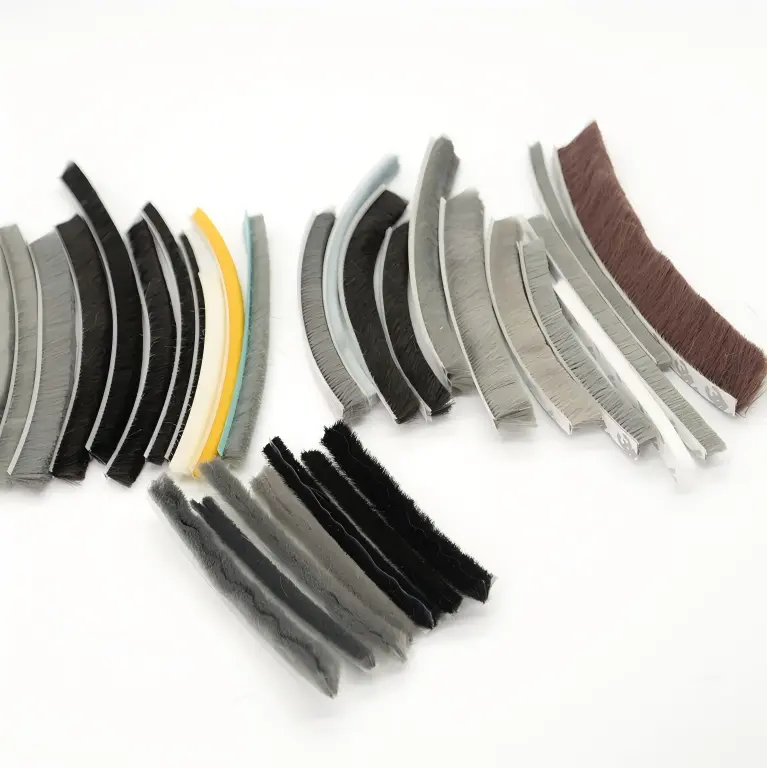
Compare the construction, then the treatment
| Option | What it describes | When to consider it | What to verify |
|---|---|---|---|
| Non-fin pile | Flexible pile without a center barrier. | A sliding profile designed for straightforward brush contact. | Backing fit, pile height, contact and movement. |
| Fin pile | A continuous barrier between pile rows. | The interface requires a defined additional barrier. | Fin material, position, height and sliding resistance. |
| Siliconized PP pile | Polypropylene fibers specified with silicone treatment. | Water repellency or treatment consistency is part of the specification. | Treatment identified on the quote, sample and relevant record. |
| Siliconized fin pile | Fin construction plus treated fibers. | Both structural barrier and treatment are required. | Both requirements approved together in the actual profile. |
| Self-adhesive pile | A bonding method, which is a separate design choice. | A retrofit frame offers a suitable flat surface. | Adhesive, coating, bonding width and application conditions. |
What a fin adds
The fin provides a continuous element through the pile. Its contact must suit the moving profile. If it is too tall or stiff for the available gap, the sash may become harder to move; if it does not contact correctly, the intended barrier is incomplete.
Use the fin pile weatherstrip product page to specify the fin, backing and pile together. A non-woven barrier, plastic film and PVC fin are distinct material requests. Ask the quotation to name the selected construction rather than describing every version simply as “premium.”
What silicone treatment changes
Silicone treatment is used in brush-pile product families to improve water repellency. The fibers are still the quoted base material, commonly PP. Treatment does not make the product a solid silicone-rubber sealing profile, and a fin does not prove that the pile was treated.
Use the siliconized PP pile weatherstrip page when treatment is the main purchase requirement. Specify whether the quoted version is fin or non-fin. Keep a retained approved sample and identify the treatment in the order record.
Wool pile, mohair, felt and poly pile: name the actual material
Wool pile weather strip, mohair seal, felt sealer and poly pile gasket appear in trade search language. A product offered under one of those names may use polypropylene rather than animal wool or mohair. A felt pad or dense felt strip is also a different structure from upright brush fibers on a backing.
On an order for this PP range, use “polypropylene pile brush weatherstrip,” then add the mounting method, treatment, fin and dimensions. “Silicified PP” is often intended to mean siliconized PP; clarify the treatment on the technical specification. “Seal strap” usually needs clarification as a sealing strip and its actual cross-section.
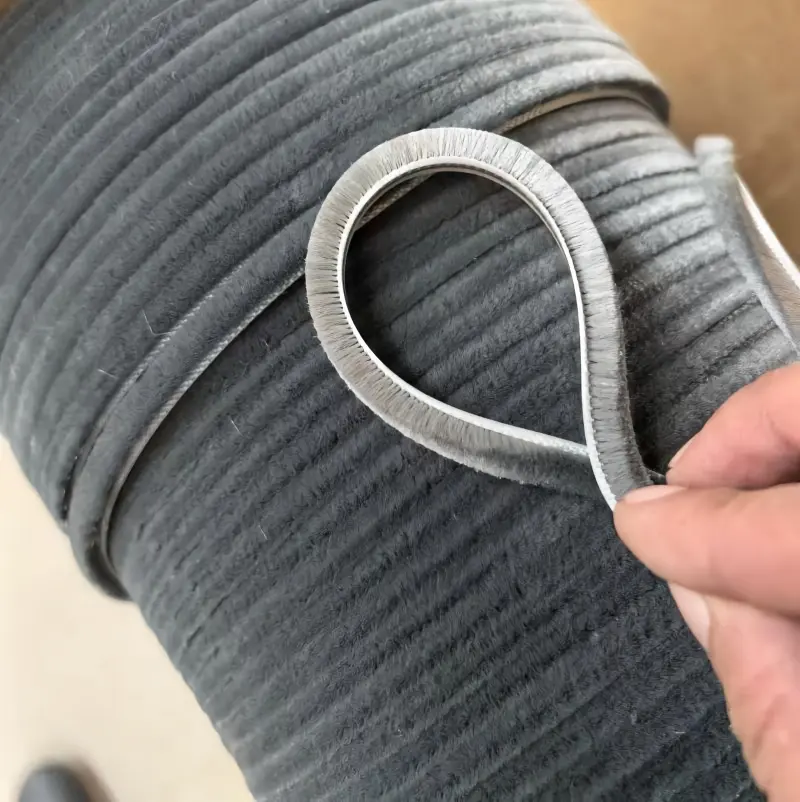
Plastic, PVC, rubber and silicone are not interchangeable
The plastic in a brush weather strip may be the backing or a carrier, while the fin can be another material. Woven and extruded constructions describe how parts of the strip are made. A product enquiry mentioning plastic adhesive weather stripping should say which backing and adhesive system is needed.
A rubber door seal, PVC compression profile or silicone gasket can be appropriate where the assembly closes by compressing a shaped section. That is a different sealing action from pile brushing against a sliding surface. For a mixed request, send the section to custom window seal profile review instead of approving a substitution from the trade name.
For PVC or uPVC frames, sometimes described in trade enquiries as plastic-steel windows, specify the actual retaining groove or flat bonding surface. A frame material name alone does not establish the correct backing width, adhesive or brush contact.
For a request labelled PVC waterproof brush seal strip, confirm whether PVC refers to the window frame, backing or fin, then specify the water-ingress requirement for the complete assembly. This prevents a frame-material description from being mistaken for a verified seal performance.
How to interpret waterproof and windproof enquiries
A brush seal can help manage an air, dust or moisture path when it is correctly fitted. A complete window’s water performance also depends on profile joints, corner continuity, pressure conditions and drainage. A water-repellent fiber treatment is not proof that the assembled window is waterproof.
Ask where leakage occurs and which result is needed. For an exterior sliding door, document the meeting stile, frame side and bottom-track drainage. For a bathroom or shower opening, distinguish a moving frame contact from a water-containment joint. Select a dedicated gasket or threshold solution where the assembly requires one.
Noise reduction, thermal insulation and anti-collision terms
Closing a gap may help reduce draft-related heat loss and some airborne or contact noise, but a brush alone does not establish a soundproof assembly, a decibel reduction or a U-value. Requests for soundproofing weather stripping or thermal insulation should identify the complete assembly and the required test result.
For a wardrobe, brush contact can also soften light contact. “Anti-collision” should not be interpreted as a load-bearing door stop, safety edge or impact-absorption rating. Check rollers, guides and alignment separately. Compare high-density wardrobe and cabinet brush seals for indoor dust-control use, and high-pile door-bottom brushes when a wider clearance needs a different section.
Brush weatherstrip or caulking for winter drafts?
Use brush weatherstrip at a moving contact designed for pile. Caulking is intended for suitable fixed joints; it should not obstruct a sliding track or drainage opening. For winter wind and drafts, first identify whether the leak comes from the moving sash, a fixed frame joint or a misaligned profile, then choose the matching repair.
A useful side-by-side sample trial
- Use the same receiving profile and gap for both samples.
- Match backing width, pile height and the height convention before comparing treatment or density.
- Record whether a fin is present, its material and its contact position.
- Check insertion, travel, locking and drainage.
- Agree any test method and acceptance criteria before requesting a report.
- Keep the approved sample, drawing revision, material description and packing label together for repeat orders.
Choose a clear purchase specification
An example is: siliconized PP pile, groove-in backing, center fin required; backing width, thickness, pile height and fin height to the attached drawing; black; specified roll length and order quantity. For a retrofit bonding surface, specify the self-adhesive brush strip and its adhesive requirement separately.
Common market sizes are available for production, with special dimensions made to customer samples or drawings. Use the pile-weatherstrip sizing guide to write those dimensions clearly. The brush seal selection overview connects the individual product routes.
Technical references
Schlegel’s seal overview distinguishes brush-pile, fin and extruded seal families. Ultrafab’s pile range illustrates the range of backing, mounting and fin constructions used in the industry. Manufacturer-specific warranties and test ratings belong to the stated manufacturer and product.
Request a quotation or sample match
Send the profile and application, fin requirement, yarn treatment, material specification, size list, quantity and any required test method.
[email protected] · WeChat / WhatsApp +86 19053267096