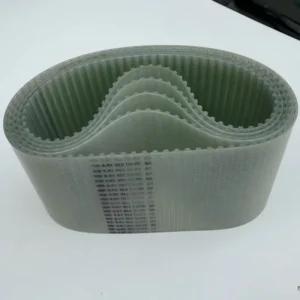
6mm 10mm width timing belts are commonly requested when maintenance teams know the measured belt width but still need the tooth profile, pitch length, material and construction matched. This page is for narrow replacement and repeat-purchase enquiries. It does not mean that belts with the same width are interchangeable.
6 mm and 10 mm Timing Belt Specification Guide
| Selection item | Enquiry reference | What must be confirmed |
|---|---|---|
| Nominal belt width | 6 mm or 10 mm | Measure the existing belt and confirm the required width and tolerance on the final drawing or order. |
| Product type | Narrow synchronous / toothed timing belt | Do not substitute a V-belt, flat belt or round belt. |
| Tooth profile and pitch | Examples buyers may encounter include T2.5, T5, AT5, MXL, XL, HTD 3M or HTD 5M | The examples are identification references, not a stock list. Match the exact profile to the pulley. |
| Length reference | Pitch length or tooth count for an endless belt; ordered cut length for an open-ended belt | Provide the full printed code where available and state the required construction. |
| Belt material | PU or rubber by approved model | Material grade and compatibility are confirmed for the operating environment; they are not inferred from color. |
| Tensile member | Specification-dependent | Confirm the reinforcement from the original code, drawing or approved quotation. A photograph does not identify the internal cord. |
| Operating data | Speed, load, duty cycle, pulley teeth, pretension and environment | These inputs are required before performance, tolerance or service-life claims can be agreed. |
The values above are ordering references only. Availability, tolerance, material grade, reinforcement, temperature range and chemical compatibility are confirmed for the exact belt in the quotation or approved drawing.
Why Width Alone Is Not Enough
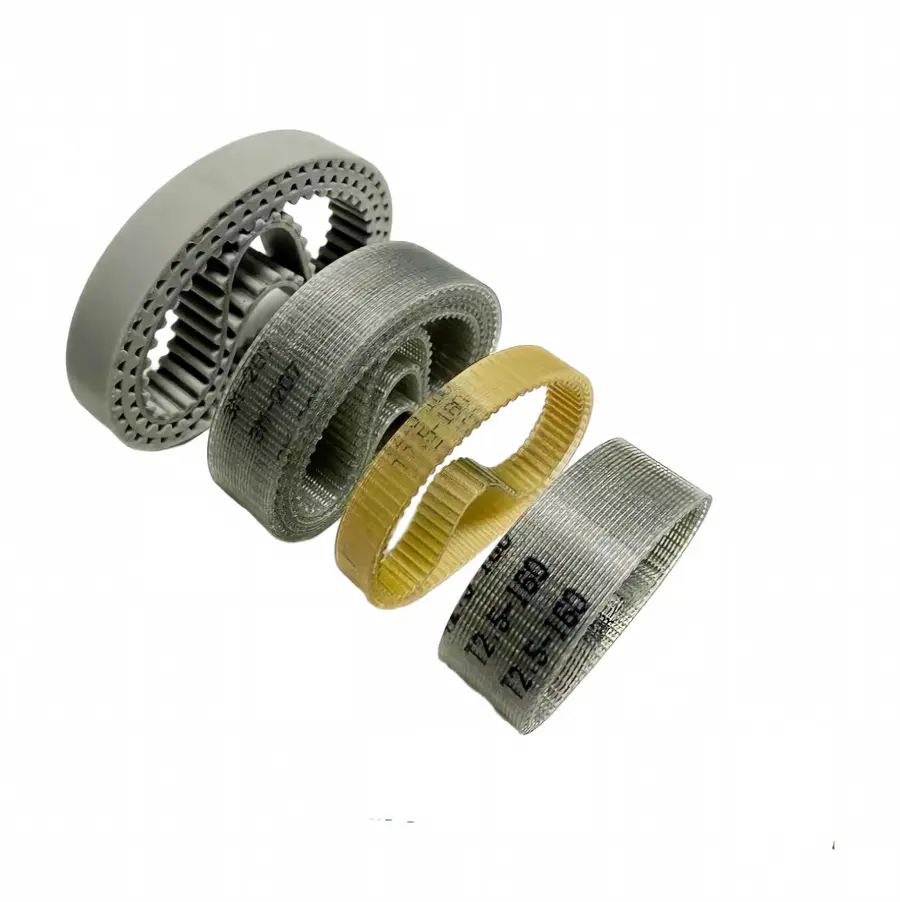
A 6 mm timing belt and a 10 mm timing belt may still use different pitches, tooth shapes, lengths, materials or tensile members. T, AT, HTD and imperial profile families are not interchangeable simply because the outside dimensions look similar. The lowest-risk replacement process starts with the complete printed belt code and then checks it against measured dimensions and the pulley.
- For an endless belt: provide tooth count or pitch length, belt width and tooth profile.
- For an open-ended belt: provide cut length, clamping arrangement, travel and tooth orientation.
- For a jointed belt: identify the joint requirement and duty cycle; a jointed belt is not assumed to equal a truly endless construction.
- For an unclear code: send front, tooth-side and edge photographs beside a ruler, plus the pulley details.
PU or Rubber: Confirm the Existing Drive
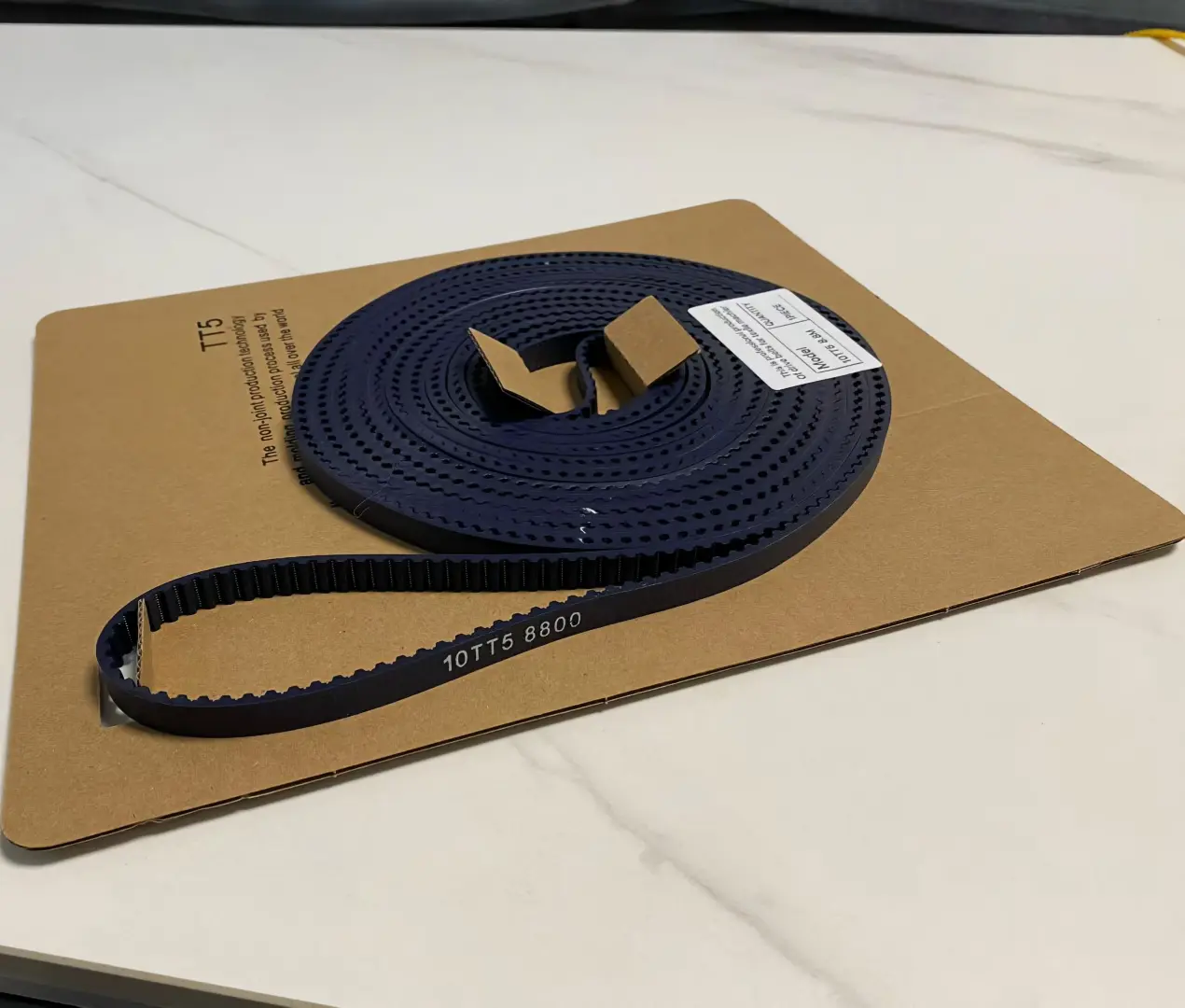
Material selection should follow the original drive design and operating conditions. A PU belt and a rubber belt can differ in tooth construction, tensile member, surface behavior and permitted environment. We therefore confirm the compound and profile for the exact code rather than applying a universal claim such as “oil resistant” or “high temperature” to every belt.
If the application needs a polyurethane synchronous belt specifically built around steel tensile cords, review our PU synchronous belt with steel wire cord page. That page covers construction-led OEM selection; this page remains focused on 6 mm and 10 mm replacement widths.
Information That Speeds Up a B2B Quotation
- Full printed belt code and required quantity.
- Nominal width: 6 mm or 10 mm, plus a measured value if available.
- Tooth profile, pitch, tooth count or pitch length.
- Open-ended, welded endless or molded endless construction.
- PU or rubber requirement and any known tensile-member specification.
- Pulley tooth count, speed, load, duty cycle and operating environment.
- Sample, drawing or photographs when the code cannot be read.
Commercial Value for Importers and Equipment Service Buyers
Clear identification reduces the risk of purchasing a belt that fits the width but not the pulley. For approved repeat items, buyers can request consistent item naming, lot identification, neutral or private-label packing and a documented specification reference. This makes replenishment easier for distributors, maintenance suppliers, equipment assemblers and after-sales service programs.
- Code and drawing review before order confirmation
- Sample approval route for uncertain or customized replacements
- Packaging, labeling and quantity review for B2B orders
- Repeat-order reference based on the approved specification
Frequently Asked Questions
Are all 6 mm timing belts interchangeable?
No. Width is only one dimension. Tooth profile, pitch, length, material, reinforcement and construction must also match the pulley and application.
Can you identify a 10 mm timing belt from a photograph?
A clear photograph helps, but it is not enough on its own. Send the printed code, measured width, tooth count or pitch length, and tooth-side photographs. A sample or pulley drawing may still be required.
Should I choose a rubber or PU timing belt?
Match the original drive specification unless the machine designer approves a change. Provide the application and environment so the exact material and compatibility can be reviewed.
Are 6 mm and 10 mm belts always available from stock?
No stock promise is made on this page. Availability, minimum quantity and lead time are confirmed only after the full belt code, construction and quantity are reviewed.
Request a 6 mm or 10 mm Timing Belt Review
Send the belt code, photographs, measured width, length reference, application and quantity. We will check the identification details before preparing a B2B quotation.
Request a B2B Timing Belt Quote
Email: [email protected]
WeChat / WhatsApp: +86 19053267096
See more drawing-based components in Other Hardwares.