
A glazing gasket can look simple from the outside while its hidden barbs, lips and cavities control the actual fit. For an OEM replacement, the safest specification combines the gasket cross-section, mating aluminum channel, glass thickness and installed direction.
This guide is for window and door fabricators, hardware importers, maintenance suppliers and buyers preparing a comparable quotation. It applies to PVC and EPDM profile projects, but it does not replace material-specific testing.
1. Record the Installed Function
First identify whether the profile supports glass, wedges into a glazing channel, closes a frame gap, clips onto an edge or performs another function. Photograph the full assembly before removing the sample. Mark indoor and outdoor sides, installation direction and any drainage or hardware nearby.
A brush pile strip and an extruded gasket can both be called a window seal, but they use different receiving features. If the sample has woven pile on a backing, use the brush seal range rather than this extrusion guide.
2. Draw the Complete Cross-Section
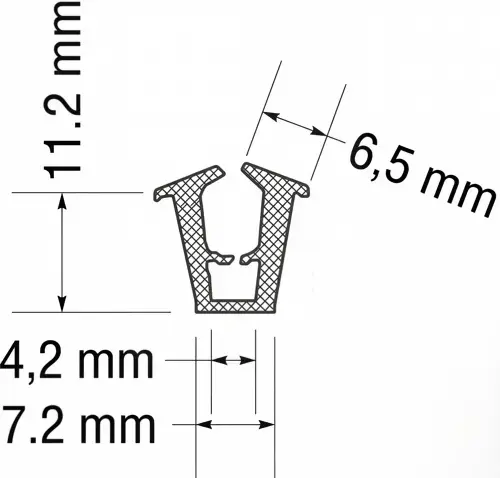
Cut the sample cleanly and photograph it square to the end. Measure:
- overall width and height;
- base or mounting-foot width and depth;
- inner channel or cavity dimensions;
- lip length, angle and spacing;
- wall thickness at important contact points;
- barbs, ribs, radii and hollow chambers;
- the datum from which each measurement is taken.
Mark critical fit dimensions separately. A supplier cannot know whether 5 × 7 mm means base width × overall height, channel × exposed height or another local convention unless the drawing defines it.
3. Measure the Mating Aluminum and Glass
Supply the aluminum channel section, not only the removed seal. Record the groove mouth, internal width, depth and undercuts. For glazing, include the glass thickness and any setting blocks or secondary components. For a closing seal, record both the free gap and the gap at the working position.
4. Treat an Aged Sample Carefully
Used material may shrink, stretch, harden or remain compressed. Measure several positions and compare them with the frame. Send a straight, undeformed piece whenever possible. If the old profile no longer represents the required fit, identify the target dimensions from the assembly rather than copying the damage.
5. Specify Material and Performance Separately
PVC or EPDM identifies a material route, not a complete performance specification. Add color, hardness or approved sample, exposure, movement, cleaning contact and any required test method. Avoid using a temperature, weathering or service-life claim unless the exact compound and acceptance criteria are agreed.
6. Define Length, Quantity and Packing
State roll length or cut length, quantity by profile, label text, packaging unit and destination. For repeat orders, use a controlled drawing number and approved sample. If the project includes 100 m rolls, confirm whether the quoted quantity is metres, rolls or cartons.
OEM Gasket Enquiry Checklist
- End-on photo and dimensioned cross-section
- Mating aluminum profile and glass or panel thickness
- Installation direction and working gap
- PVC or EPDM requirement, color and approval reference
- Length format, quantity by model and packing
- Destination and required sample or test process
Compare the PVC glazing gasket, the compression bulb seal and the custom extrusion route. Browse the full PVC and EPDM sealing profile category.