
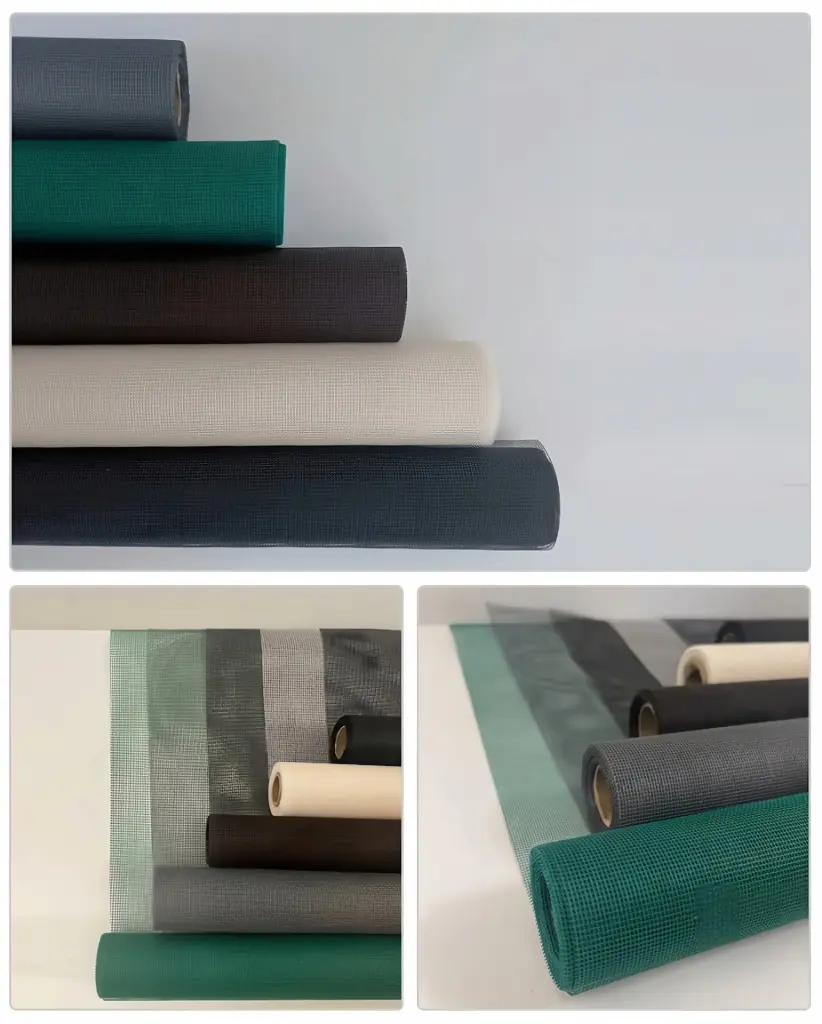
Fiberglass and stainless steel window screens can both provide ventilation with an insect barrier, but they lead to different purchasing and fabrication decisions. Comparing only “strong” or “invisible” on a supplier’s description misses the details that determine whether a mesh will work in the buyer’s frame.
Start with the purpose of the opening, how the mesh will be retained, the exposure conditions and the required evidence. This guide compares the materials and explains common specifications without treating a roll of insect mesh as a complete security or fire-protection system.
Compare the construction before the material name
| Purchasing point | PVC-coated fiberglass screen | Stainless steel insect screen |
|---|---|---|
| Construction | Woven fiberglass yarn with a protective PVC coating. | Woven stainless steel wire; grade and surface finish must be specified. |
| Fabrication focus | Yarn stability, cutting, tension and groove/spline fit. | Wire stiffness, cut-edge handling, tension and suitable retention. |
| Appearance | Colour, yarn diameter and weave affect visibility. | Wire diameter and finish affect visibility; metal is not necessarily a dense-looking screen. |
| Specification priorities | Mesh count, finished yarn diameter, GSM and roll dimensions. | Steel grade, mesh count, wire diameter, coating and roll dimensions. |
Standard fiberglass is widely used where processors value a flexible material for routine screening. ADFORS describes its standard fiberglass screen as a flexible, economical construction. Fine-wire stainless products also exist: Phifer’s stainless steel insect screen uses fine wire to support outward visibility. Neither example makes one material the best choice for every project.
What do metal mesh, wire cloth and spray-coated mean?
A stainless steel wire mesh screen is a woven metal fabric used in window-screen assemblies. Buyers may also describe it as window screen wire mesh or wire cloth. Metal mesh is a broad purchasing term. An enquiry should identify stainless steel, aluminium or another metal rather than relying on “metal window mesh.” The alloy or grade matters, and a woven mesh should not be confused with a perforated metal sheet.
PVC-coated fiberglass describes both a substrate and a coating. “Plastic spray-coated mesh” is less specific: it does not identify the underlying metal or polymer, nor establish whether the supplier means a powder coating or another application process. Ask for the base material, coating type, colour and the diameter of the finished strand.
Different coating descriptions should not be treated as interchangeable quotation lines. Walcoom’s window-screen catalogue, for example, distinguishes PVC-coated fiberglass from powder-coated metal screen constructions. That distinction is useful when approving a sample or investigating a finish change.
Visibility depends on diameter, openings and finish
“Invisible window screen” usually expresses a desire for a less noticeable mesh. It does not mean the screen disappears. Buyers should compare samples against the same background, with similar lighting and installation tension.
A thin strand can leave more open space at a given mesh count. A denser weave with thicker strands may provide smaller insect openings while making the screen more visible. This is why two meshes labelled 20×20 can deliver different results. Our mesh count, diameter and GSM guide explains those measurements.
For a showroom or residential window programme, an installed sample is more informative than an enlarged mesh photograph. Check the view from normal standing distance, the appearance of the frame edges and the effect of screen colour.
Match the mesh to the frame and operating system
A suitable mesh still needs a compatible frame. Before changing an existing product from fiberglass to stainless steel, check the retaining groove, spline or clamping method, available tension and cutting process. Assess a complete sample frame for edge pull-out, distortion and normal operation.
In a magnetic window screen or magnetic door screen system, the magnets usually belong to the attachment or closing arrangement. The insect mesh itself does not need to be magnetic. A roll of fiberglass mesh, a magnetic frame kit and a finished magnetic door curtain are different purchasing items.
For a custom frame project, provide a section drawing and identify exactly what is being sourced. Roll mesh supply should include usable width and cutting requirements; a complete screen enquiry also needs opening dimensions, frame details and hardware.
Evaluate corrosion resistance and high-strength claims
Corrosion resistance is an important reason to consider stainless steel, but “stainless” should not replace a grade specification or a maintenance plan. Tell the supplier about coastal exposure, cleaning chemicals and any contact with other metals. Request a suitable finish and evidence relevant to that environment.
High strength also needs a reference point. Ask whether a claim concerns the wire, woven mesh, edge retention or finished screen. Comparisons are meaningful when specimen dimensions and test methods match. A heavier mesh can place different demands on fabrication and the frame; assess the whole assembly before changing a repeat-order specification.
Separate insect screening from security and fire performance
An ordinary stainless steel fly screen is not automatically an anti-theft or security screen. Those applications require the mesh, frame, retention, locks and installation to work as an assessed system. A request for security performance should state the required test or project specification, with evidence for the offered assembly.
Likewise, fire-retardant and fire-resistant should not become interchangeable marketing labels. Ask what was tested, how the test was performed and what result applies to the supplied construction. A claim about flame behaviour of coated mesh does not establish a fire rating for the complete window. ADFORS links its flame-resistance claims to testing and its coating formulation, illustrating why evidence must be product-specific.
Choose a purchasing route that matches the job
For standard insect screening, compare our PVC-coated fiberglass screen rolls. For smaller openings, review 20×20 fine-mesh fiberglass. Distributors needing identifiable supply lines can also discuss printed mesh and coloured selvedges.
Use the window mesh overview to select the relevant fiberglass construction. Send the required mesh count, roll sizes, intended frame and order quantity with your enquiry. Where a project specifies metal mesh or tested specialist performance, state that requirement at the outset so the appropriate product scope can be established.