
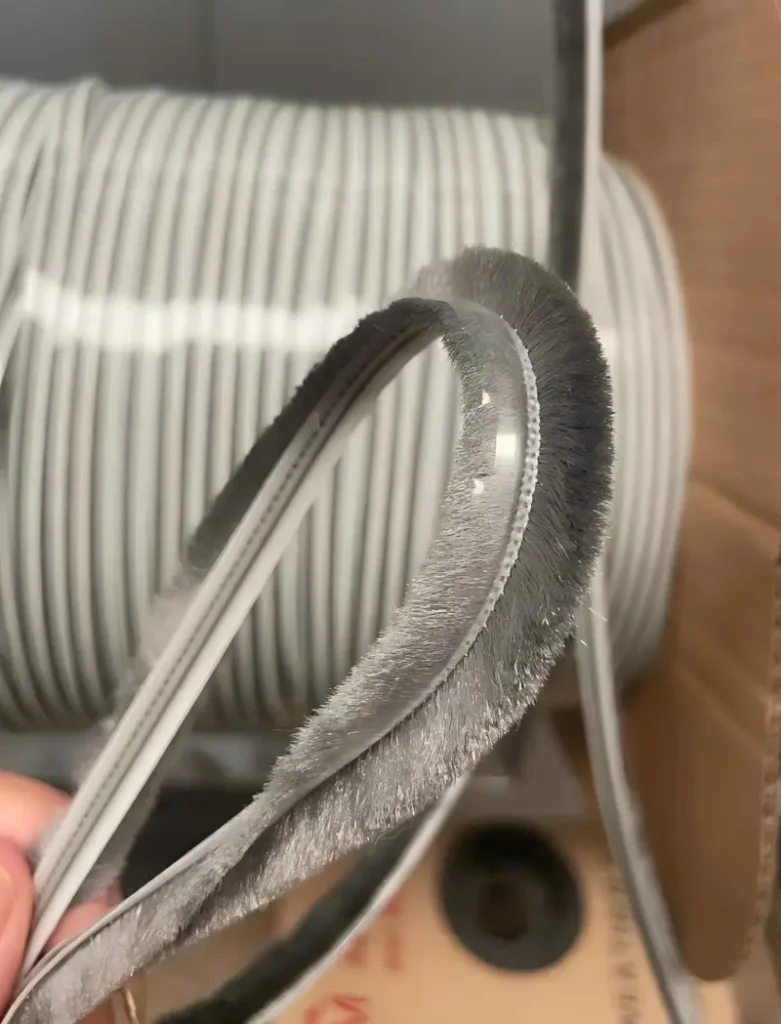
T-slot pile weatherstrip and kerf pile weatherstrip describe different ways of retaining a seal in a profile. A matching brush height does not make the two mountings interchangeable. For an OEM order or an obsolete replacement, identify the backing cross-section before choosing the pile material, treatment or color.
Compare how the backing is retained
| Fitting route | What the profile retains | Information needed |
|---|---|---|
| T-slot / slide-in pile | Typically a flat foot under the lips of a compatible channel, introduced from an accessible end. | Backing width and thickness; slot opening, internal width and depth; insertion access and end retention. |
| Kerf-fit pile | A stem or retaining leg pressed into a matching slot; the exact stem and barb geometry varies by design. | Slot width and depth; retaining-leg section; shoulder position; material and insertion method. |
| Surface adhesive pile | An adhesive backing bonded to a suitable prepared surface. | Bonding width, surface condition, contact direction and the intended environment. |
A frame being aluminum, PVC or timber does not by itself identify the correct fitting. Some profiles use separate carriers. Send the actual section rather than selecting a mounting from the frame material alone.
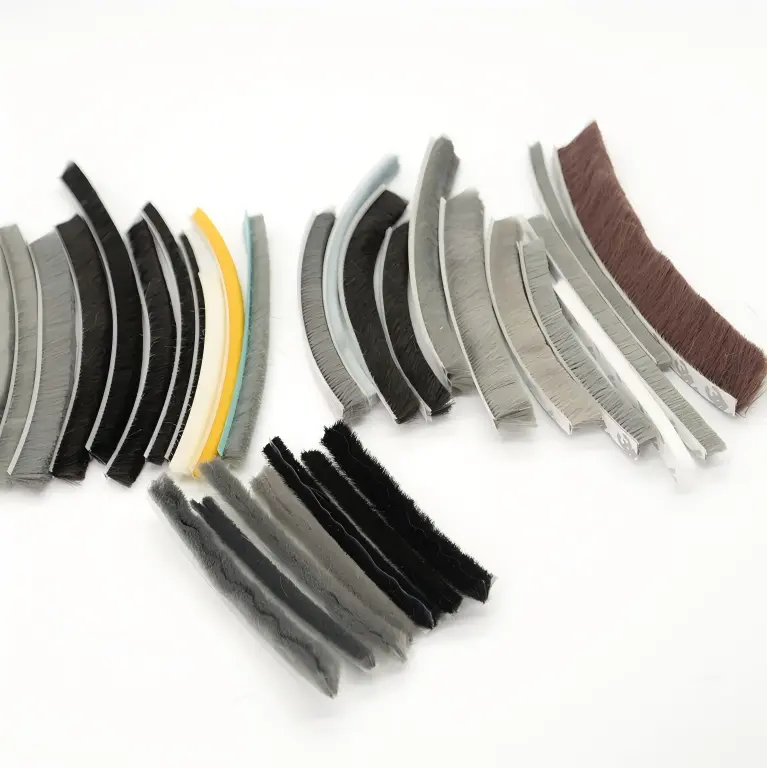
Woven pile, extruded backing and rigid backing
These terms answer different questions. “Woven” describes a textile construction, while “extruded” can describe a formed carrier. A brush assembly may combine pile with a separate rigid carrier. Ask for the complete section and material specification rather than inferring the mounting method from one manufacturing word.
Similarly, a fin, siliconized treatment and a backing design are separate choices. An ultrasonic-welded or multi-fin construction should be specified and confirmed for the proposed product. Do not assume those features from the general term “pile weatherstrip.” Our fin versus siliconized pile guide explains the treatment distinction.
Inspect a replacement before requesting a quote
- Photograph the installed position before removal. Show the direction of movement and the surface touched by the pile.
- Keep a short undamaged seal section and, where practical, a profile offcut. A flattened or stretched backing can give misleading dimensions.
- Measure the retaining feature separately from the pile width and height. For kerf designs, include the full leg and shoulder geometry.
- Check whether the strip can be fed from the end or must be fitted after the frame is assembled. Identify any corner or end stop.
- Mark the working gap and any variation along the travel. Agree on a sample trial and acceptance criteria before bulk ordering.
When the drawing uses decimal inches, refer to the inch-to-mm pile weatherstrip backing guide. Converting a width correctly still does not confirm that the retaining shapes match.
Two application checks that lead to different products
Commercial aluminum entrance doors
Use the storefront door pile weatherstrip route for compatible meeting-stile or frame channels. The sample trial should cover closing movement, latch operation and contact along the door height. Send a door photo with the seal position marked, not only a close-up of loose fibers.
Roller shutter side guides
Use the roller shutter guide rail brush seal route for a strip retained beside a moving curtain. Supply both rail and slat sections, then review pile reach, drag and retention through the travel. A larger brush is not automatically the right way to deal with an uneven guide.
What Gleam needs to review a kerf or special carrier request
The two product routes above concern compatible channel-fit pile strips. For a kerf leg, rigid carrier or unfamiliar extrusion, send the drawing and physical sample through our custom seal profile inquiry. Feasibility, tooling requirements, material and commercial terms are confirmed for that design.
Include AAMA 701/702 and performance needs in the RFQ
AAMA 701/702 covers pile weatherstrips and polymer weatherseals, with laboratory verification requirements. For a project using this specification, provide the required edition, product scope and documentation requirements. The FGIA specification listing identifies AAMA 701 for pile weatherstrips and AAMA 702 for polymer weatherseals.
Add any water-repellent, high-recovery pile, acoustic, air-leakage or durability requirement to the drawing package. State the required method and acceptance level where the project specifies one. This allows material, construction, sample approval and documentation to be discussed together before the order is finalized.
Frequently asked fitting questions
Can adhesive pile replace a slide-in strip?
Only after reviewing the application. Bonding changes how the strip is retained and may change its position. Where a retaining channel is available, first check the correct channel-fit replacement. For a deliberate surface-bonded application, compare self-adhesive brush pile weatherstrip.
Is “wool pile” a mounting specification?
No. Buyers also use fuzzy seal or felt seal as descriptive terms. State the actual fiber material, backing and retaining geometry in the RFQ; the nickname alone does not identify the correct product.
What if the profile is already assembled?
Check access and the manufacturer’s installation method before selecting a strip. Do not assume the channel lips can be opened or that a kerf leg can be forced into a T-slot. Supply photos of the available access with the drawing.
Industry construction reference: Schlegel’s combination brush pile overview provides examples of pile and carrier combinations.
Compare the full brush seal product range or send a profile for a specific supply review.
Request an OEM quotation
Send your profile drawing or sample photos, required dimensions, quantity and delivery country. Include the installed application so we can review the fit before quoting.