
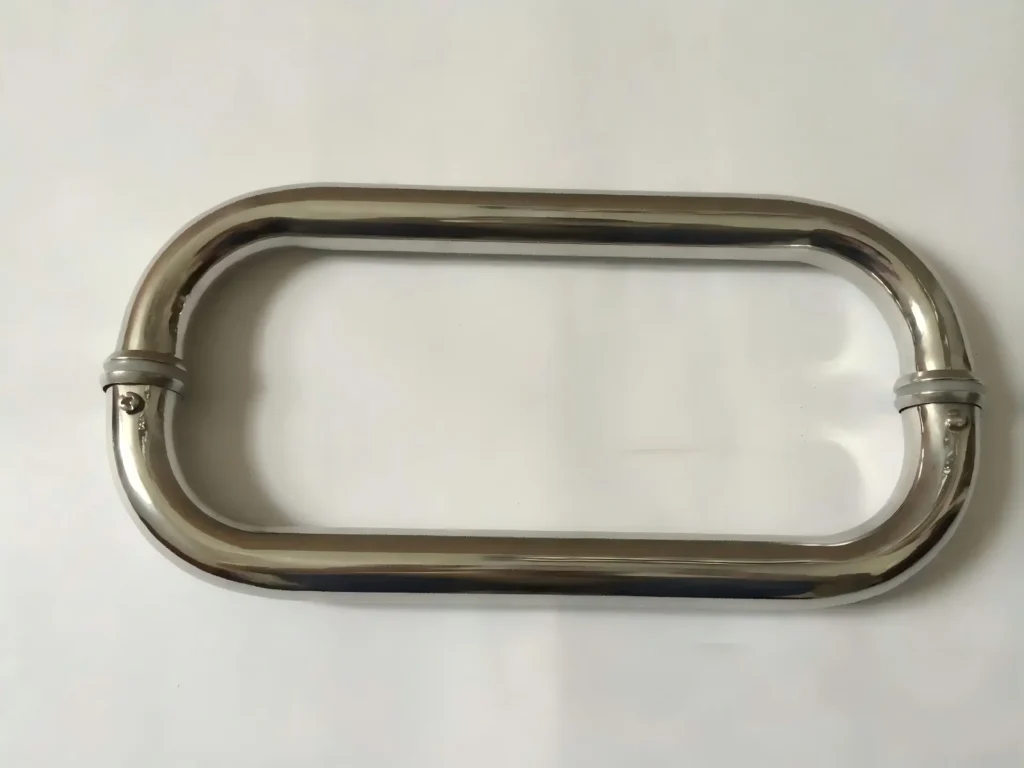
Comparing SS304 vs SS316 glass door handles is an environmental and purchasing decision, not a choice that can be made from a polished photograph. Start with the location of the door, the expected salt or chemical exposure and the cleaning plan. Then confirm the grade and finish for the actual handle assembly.
After identifying the installation environment, use the glass door pull handle selection table to choose the shape and size. Specify the grade, finish and mounting kit together for the selected model.
This guide helps project buyers, hardware brands and importers prepare a material brief for coastal buildings, showers and commercial entrances. Qingdao Gleam Hardwares reviews Manufacturer/OEM requirements against the requested drawing and order specification. The photos show design and component references; they do not certify the metal composition or corrosion performance.
SS304 vs SS316 glass door handles: the practical difference
304 is a chromium-nickel stainless steel used for many general applications. 316 includes molybdenum, which supports improved resistance to localized corrosion in many chloride-containing environments. Outokumpu describes these grade families in its austenitic stainless steel overview and Supra 316 range information.
| Question | SS304 request | SS316 request |
|---|---|---|
| Where does the review begin? | A candidate for many controlled interior conditions. | A candidate when the exposure calls for greater corrosion resistance. |
| What changes in the alloy family? | Chromium-nickel stainless steel. | Chromium-nickel-molybdenum stainless steel. |
| What still needs agreement? | Finish, actual exposure, fixing components, inspection and cleaning. | The same details; a grade name is not a complete service specification. |
| Is performance guaranteed by the name? | No; suitability depends on the application. | No; severe environments can require further material review. |
These are starting points for a specification review, not approvals for a particular building. Select the required grade with the project specifier and request a quotation against that choice. Do not treat a label such as “stainless” or “marine grade” as a substitute for a documented requirement.
Coastal projects need a location-specific brief
A reception door inside an enclosed lobby can face different exposure from an external handle near sea spray. Describe the actual opening, whether it is sheltered, how deposits are removed and who will maintain it. Distance from the shoreline alone is not enough information to approve the material.
Outokumpu’s atmospheric corrosion guidance identifies chlorides, moisture, surface condition and washing as relevant factors. It also discusses higher-alloyed grades for demanding coastal and industrial marine exposure. Therefore, 316 should not be presented as universally corrosion-proof beside the sea.
For a tall lobby or exterior entrance, review our 1200 mm stainless steel glass door pull handle and specify SS316 if the project assessment calls for it. Include the site exposure, overall length, mounting centers and finish in the enquiry.
For a stainless steel ladder pull handle at a commercial entrance, add the exposure description to the door schedule before comparing offers. Check the required grade of the grip, mounting posts and fasteners individually. Do not assume that every component in a set has the same composition as the visible tube.
Showers: separate humidity from the cleaning environment
The word “bathroom” does not describe every service condition. Ask about water exposure, ventilation, cleaning products, rinsing and the opportunity for the hardware to dry. A guest shower, a frequently cleaned public washroom and a poolside enclosure may need different technical reviews.
For frameless shower glass door pull handles, submit the planned cleaning-product information with the finish reference. Confirm the compatibility of the complete hardware and glass system. Avoid approving a cleaner or a chemical concentration simply because another project used it successfully.
| Project situation | Questions for the project team | Enquiry attachment |
|---|---|---|
| Coastal hotel entrance | Is the handle inside, outside or exposed to salt-bearing air? How is it washed? | Opening location and maintenance brief. |
| Guest shower enclosure | What cleaners are planned, and how will surfaces be rinsed and dried? | Cleaning-product information and enclosure drawing. |
| Office interior | What appearance, handling and cleaning requirements apply? | Finish sample reference and door schedule. |
| Brand range with several finishes | Are different colors offered on the same base grade and construction? | Variant-by-variant specification and label plan. |
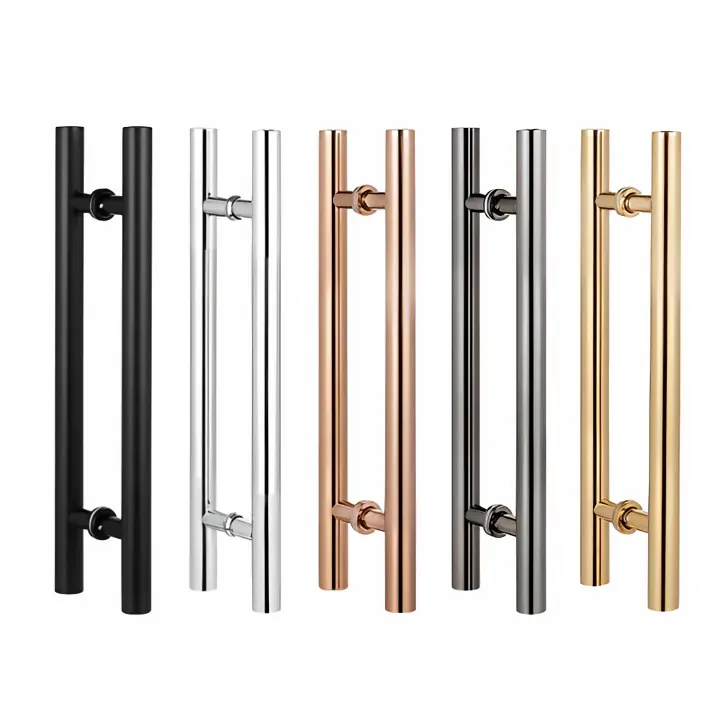
Finish, color and handle shape need their own approval
A matte black surface does not identify whether the base metal is 304, 316 or another material. For matte black H style glass door pull handles, specify the base grade separately from the coating or finishing process, the appearance sample and the agreed care instructions. Ask how edge details and fixing components will match the selected finish.
Surface condition, contamination, geometry and maintenance can affect stainless steel corrosion behavior, as explained in Outokumpu’s corrosion-resistance overview. A finish sample is useful for visual agreement; it is not evidence of a salt-spray result or a service-life rating.
Keep the material decision separate from style selection. Square tube glass door handles and curved glass door pull handles can create different design effects, but appearance alone does not establish strength or suitability. Confirm the profile, construction, projection and fixing arrangement for the selected variant.
What evidence should a material enquiry request?
Write the required grade designation into the specification and identify the components it covers. State what material documentation or verification is needed and agree whether it can be supplied for the order. If testing is required, define the method, sample scope and acceptance criteria before relying on a result. Do not describe an untested sample as certified.
Retain a traceable connection between the approved specification, the ordered variant and the delivered package labels. A report from an unrelated material batch or a different finish does not resolve the question for your actual purchase. Ask how the proposed evidence relates to the material and components being quoted.
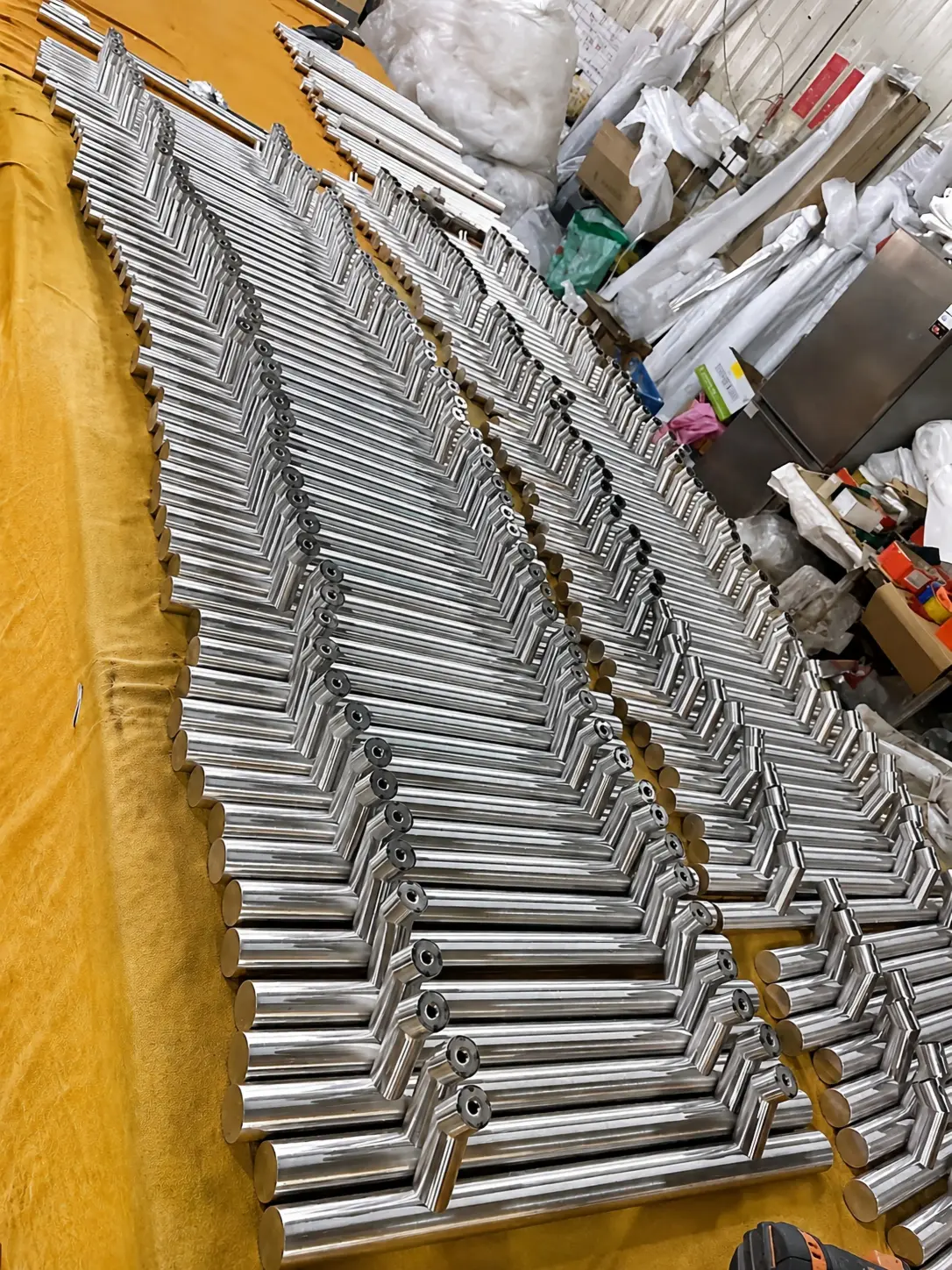
Compare complete handle sets when reviewing quotations
Two offers are only comparable when they describe the same scope. Alongside the requested grade, list the grip and post construction, finish, mounting dimensions, fixing components and pack contents. If wall thickness is important to your specification, give the required value and how it will be checked; there is no single wall thickness implied by a product photograph.
For back-to-back glass door pull handles with an SS304 requirement, confirm whether the price basis covers a complete paired set and the agreed mounting kit. For a long entrance pull, specify the requested overall length separately from mounting centers and agree protective packing for the finished surfaces.
Check the fit before approving a material substitution or style change. The glass door handle hole-spacing measurement guide explains the information needed, and the custom hole pitch handle page is the appropriate starting point when an existing opening dictates the fixing positions.
Apply the Material Choice to Your Handle Schedule
- For a regular paired round-tube range, compare SS304 back-to-back H-style handles and include the required grade in the enquiry.
- For coordinated commercial entrances, review stainless steel ladder pulls with the exposure and finish schedule.
- For a long lobby or exterior grip, see the 1200 mm project pull and specify any SS316 requirement along with the mounting layout.
The handle shape does not establish its steel grade. Apply the exposure assessment and approved material requirement to each ordered model.
Frequently asked questions
Can SS304 handles rust in a coastal hotel?
They can develop staining or localized corrosion under unsuitable exposure or maintenance conditions. Assess the actual location and cleaning plan rather than assuming that all indoor or coastal installations behave alike.
Does SS316 mean maintenance-free hardware?
No. The assembly still needs an appropriate finish, compatible components and a care plan for its actual environment. Request specialist material review where exposure is severe.
Can a finish photograph prove the material grade?
No. A photograph can support agreement on style and appearance. Confirm the specified grade and any required material evidence through the order documentation.
Should all the hardware in one project use the same grade?
Coordinate the project specification, but review different exposure zones and components explicitly. A common visual finish does not mean every opening has the same environmental requirements.
Prepare a material and drawing review
Send the opening location, requested grade, finish reference, glass drawing and number of paired sets. Include the fixing-kit scope, cleaning information, packaging labels and any requested evidence. Request an OEM drawing and material review for your glass door project. Availability and production timing are confirmed with your quotation. Use the glass door pull handle selection page to identify the relevant design family.