
A brush weatherstrip order is easy to misread when it contains only two numbers. A 5.5 × 6 mm seal may describe backing width and pile height, while another supplier may use total height as the second value. Those products can look similar and still fit differently.
This guide explains how window fabricators, hardware importers and OEM buyers can specify a repeatable size, especially when replacing a seal or comparing quotations. Start with the receiving profile and its working gap, then record the seal dimensions.
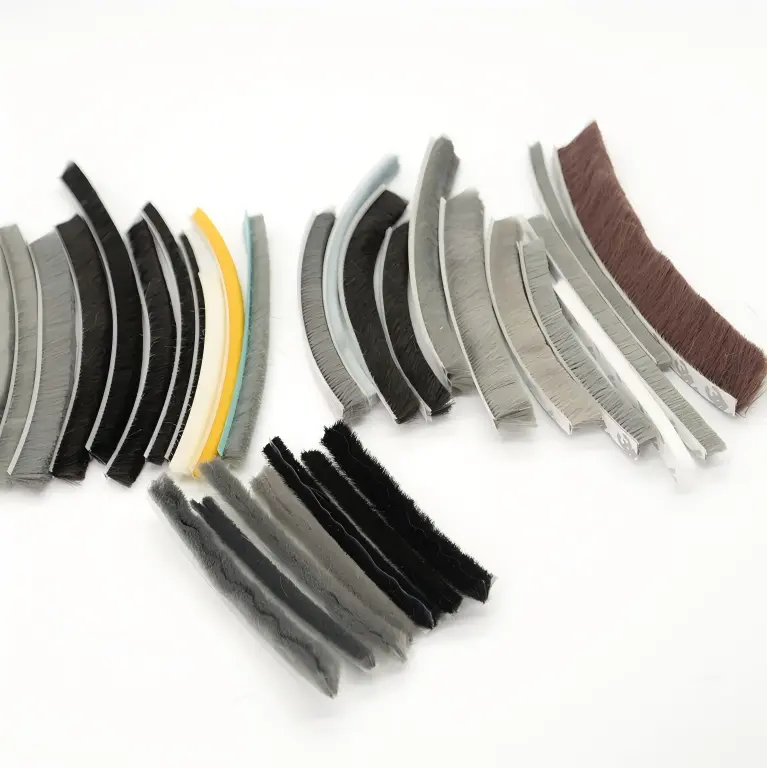
Keep these measurements separate
| Dimension | How to describe it | Common ordering mistake |
|---|---|---|
| Backing width | Width of the retaining base or bonding strip, shown on a cross-section. | Measuring the fluffy fiber spread instead of the base. |
| Backing thickness | Thickness that must fit beneath the groove lips or within the holder. | Matching width while overlooking a base that is too thick. |
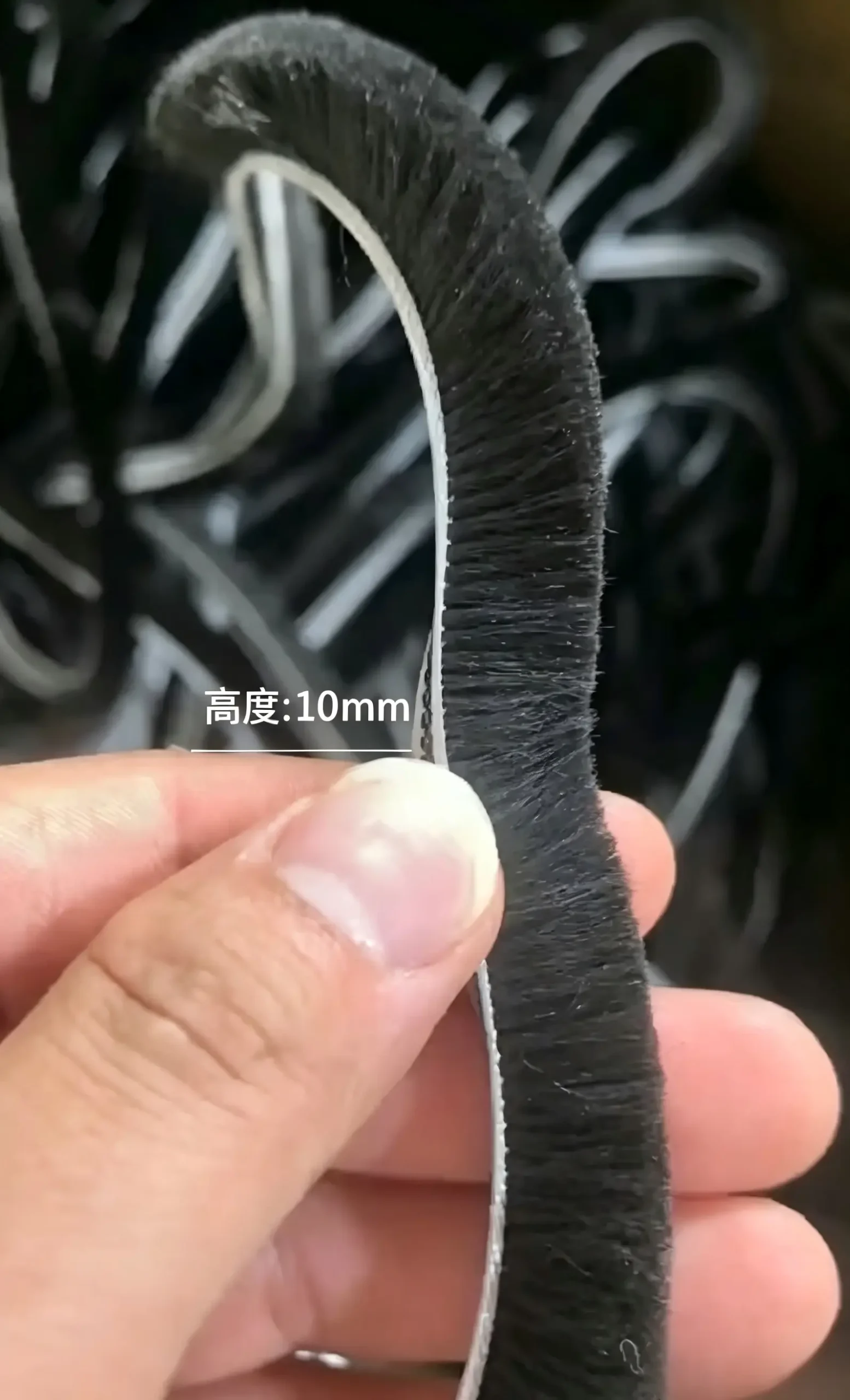
| Pile height | Height of the free fibers above their supporting base; mark the datum. | Treating pile height and total height as the same. |
| Overall height | Base plus pile, according to the dimensioned drawing. | Comparing two suppliers using different height conventions. |
| Fin height | Height and position of the center barrier, if present. | Assuming the fin always ends at the pile tip. |
| Working gap | Actual clearance to the opposing face when the assembly is in use. | Selecting from the worn height of an old compressed seal. |
How to read 5.5 × 6 mm
For an order using backing width × pile height, “5.5 × 6 mm” means a 5.5 mm backing and 6 mm pile measured from the agreed base datum. If the second number is overall height instead, the free pile will be lower by the backing contribution. Write the convention beside the dimensions.
A practical enquiry reads: 5.5 mm backing width; 6 mm pile height measured above the backing; backing thickness to attached drawing; non-fin PP pile; gray; required roll length and quantity. This is a specification example, not a measured description of the photos.
Does 5.5 × 6 mm identify a soundproof rubber door seal?
The size alone identifies neither the material nor an acoustic rating. For a 5.5 × 6 mm weather strip, state whether you need upright PP pile for a sliding contact or a shaped rubber seal for a compression joint, and attach the cross-section. If sound reduction is a project requirement, include the complete door or window assembly and its required test result. The material and performance selection guide explains how to compare those requests.
How to read 9 × 23 mm
“9 × 23 mm” can identify a wider, taller brush section, but it does not by itself specify the retaining foot or free brush reach. For a door bottom, show the holder cross-section and the height concealed inside it. Measure the floor or frame-side clearance along the whole travel path.
Compare the high-pile door-bottom brush route when a short window pile cannot reach the contact face. Use custom profile matching if the holder has an unusual T-shaped, narrow-neck or stepped retaining section.
9 × 23 mm self-adhesive strip for a sliding wardrobe or window
For this order, specify adhesive mounting and the available flat bonding width alongside the 9 × 23 mm section. On an aluminum-alloy frame or a plastic-steel window frame, trial adhesion on the actual coating and check that the taller pile has room to move. A sliding wardrobe also needs a door-overlap and clearance check; a frame with a retaining channel needs a matching groove-in section. Use the self-adhesive brush strip page for bonding requirements and the custom profile service to submit the complete drawing or sample.
Common sizes and made-to-order options
Gleam can produce common market sizes and develop special dimensions from customer samples or drawings. Typical ordering references include 5 × 5, 5 × 7, 5 × 9, 5.5 × 6, 7 × 5, 7 × 10 and 7 × 15 mm; a 9 × 23 mm tall-pile section needs its own holder and contact review. These options belong to different constructions and are not interchangeable across every groove.
Published manufacturer catalogues also use precise backing widths such as 4.75, 5.82, 6.86 and 7.87 mm. A distributor may round these in a sales description. Do not substitute a rounded family name for the approved drawing dimension when the groove fit is critical.
A practical measurement sequence
- Identify the mounting method. A groove-in seal is retained by the profile; a self-adhesive strip bonds to a surface. Record this before choosing the size.
- Expose an intact section. Avoid measuring only a damaged end or heavily compressed fibers. Keep a short sample of the original base.
- Measure the receiving groove. Record internal width, lip opening and depth, with clear caliper photos or a cross-section drawing.
- Check the working gap. Measure at several positions along the frame and through the door or sash travel.
- Document the seal section. Mark backing width, thickness, pile height, total height and optional fin height separately.
- Trial the proposed seal. Check insertion, retention, continuous contact, locks, drainage and sliding resistance.
- Approve an order reference. Keep the drawing revision, retained sample, color and packing requirement together.
Choose a product route from the installation
| Situation | Product route | Extra information needed |
|---|---|---|
| Existing aluminum sliding-window channel | Non-fin groove-in brush seal | Groove and backing geometry, working clearance. |
| A central barrier is specified | Fin pile weatherstrip | Fin height, position and acceptable movement. |
| Flat retrofit bonding surface | Self-adhesive brush pile weatherstrip | Available bonding width, coating and adhesion trial. |
| Wardrobe or cabinet dust-control gap | High-density wardrobe brush seal | Door overlap, density sample and travel check. |
| Wider door-bottom or side gap | High-pile door bottom brush seal | Holder, free pile reach and gap variation. |
| Unusual T-slot or replacement profile | Custom profile and sample matching | Complete cross-section, tolerances and insertion path. |
What changes for self-adhesive weather stripping?
Measure the usable flat bonding width rather than a groove. The surface must suit the adhesive and provide room for the strip without crowding hinges, rollers or locking points. For steel-reinforced uPVC frames, the bonding surface is the outer frame finish; the internal reinforcement does not define adhesive compatibility.
Trial the actual coating and follow the selected adhesive’s application instructions. A strip that sticks initially is not automatically approved for the expected temperature, moisture and cleaning conditions.
Order record for importers and distributors
Put each product’s size convention, construction, color, treatment, metres per roll or length per piece, quantity and drawing revision on the order. Separate fin from non-fin models and adhesive from groove-in models. Request a label that helps the warehouse identify those distinctions without opening every reel.
For material selection, read fin versus siliconized pile weatherstrip. For the full production and sample workflow, use the OEM sample approval and packing guide. Return to the brush seal selection overview to compare all seven product routes.
Technical references
For examples of manufacturer dimensional conventions and construction-specific sizes, see Ultrafab’s Tri-Fin size table and Schlegel’s seal range overview. These are industry references; their branded constructions, certifications and performance ratings are not Gleam product claims.
Request a quotation or sample match
Send a marked section drawing or sample, the receiving groove or bonding width, the working gap, size list, quantity and packing requirements.
[email protected] · WeChat / WhatsApp +86 19053267096