
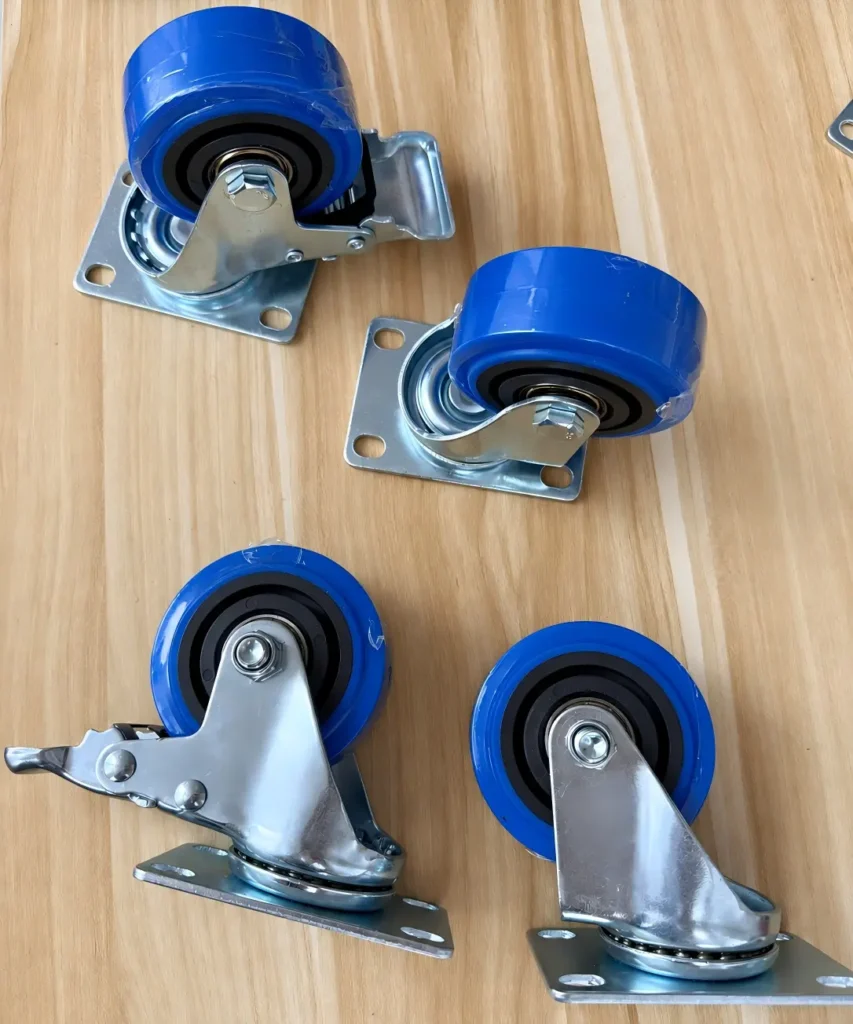
A service trolley can have a good-looking frame and still feel inexpensive if the wheels rattle, drag or transmit every floor joint into the equipment. For OEM buyers, choosing quiet TPR casters is therefore an equipment-design decision. The task is to match the tread, bearings, bracket and working route to the experience the customer is paying for.
TPR, or thermoplastic rubber, combines a resilient rubber-like running surface with thermoplastic processing. It is a candidate for higher-specification hotel carts, instrument stands, medical-support trolleys and commercial furniture. It can also be used on ordinary industrial carts when its rolling characteristics and total project cost make sense. This guide focuses on how to specify that result; the existing rubber, PU, PVC and TPR material guide covers the broader material comparison.
1. Define What “Quiet” Means on the Actual Route
Silent wheels, noiseless casters and mute rubber wheels are common buying terms, but none defines a test condition. A caster that sounds quiet on a smooth sample board can produce noise when a loaded trolley crosses a tile joint or a threshold. Start with the floor and the equipment rather than an unqualified sound claim.
- Record the floor: tile, sealed concrete, vinyl, timber or another surface, including joints and transitions.
- State loaded equipment weight, movement frequency and normal operating speed.
- Identify loose panels, trays, tool drawers or case hardware that may contribute to the sound.
- Compare sample assemblies under the same load, route and operating procedure.
- If a measured acoustic requirement matters, agree the test setup and acceptance limit before production.
A resilient tread may reduce transmitted vibration, but it is not the same thing as a spring-loaded shock-absorption caster. Wheel-bearing fit, the swivel head and equipment construction remain part of the result. This distinction helps procurement teams avoid paying for a “silent” label without a defined acceptance check.
2. Translate the Application into a Purchase Specification
| Application | What the buyer is trying to improve | What to include in the RFQ |
|---|---|---|
| Hotel service and housekeeping carts | A quieter route through guest areas and easier repositioning | Floor samples or route photos, loaded weight, handle position and brake access |
| Medical-support and instrument trolleys | Controlled movement around equipment and a defined parking function | Cleaning agents, load distribution, retention, brake function and equipment-specific requirements |
| Commercial furniture and mobile shelves | Refined rolling feel without an awkward increase in overall height | Mounting layout, installed height, visible finish and floor-contact sample check |
| Indoor tool carts and industrial handcarts | Rolling comfort during repeated movement | Daily duty, wheel width, bearing fit, joints and required working load |
| Food carts and seafood handling areas | Move loaded equipment while addressing wet or corrosive exposure | Washdown method, chemicals, salts, bearing protection and bracket material |
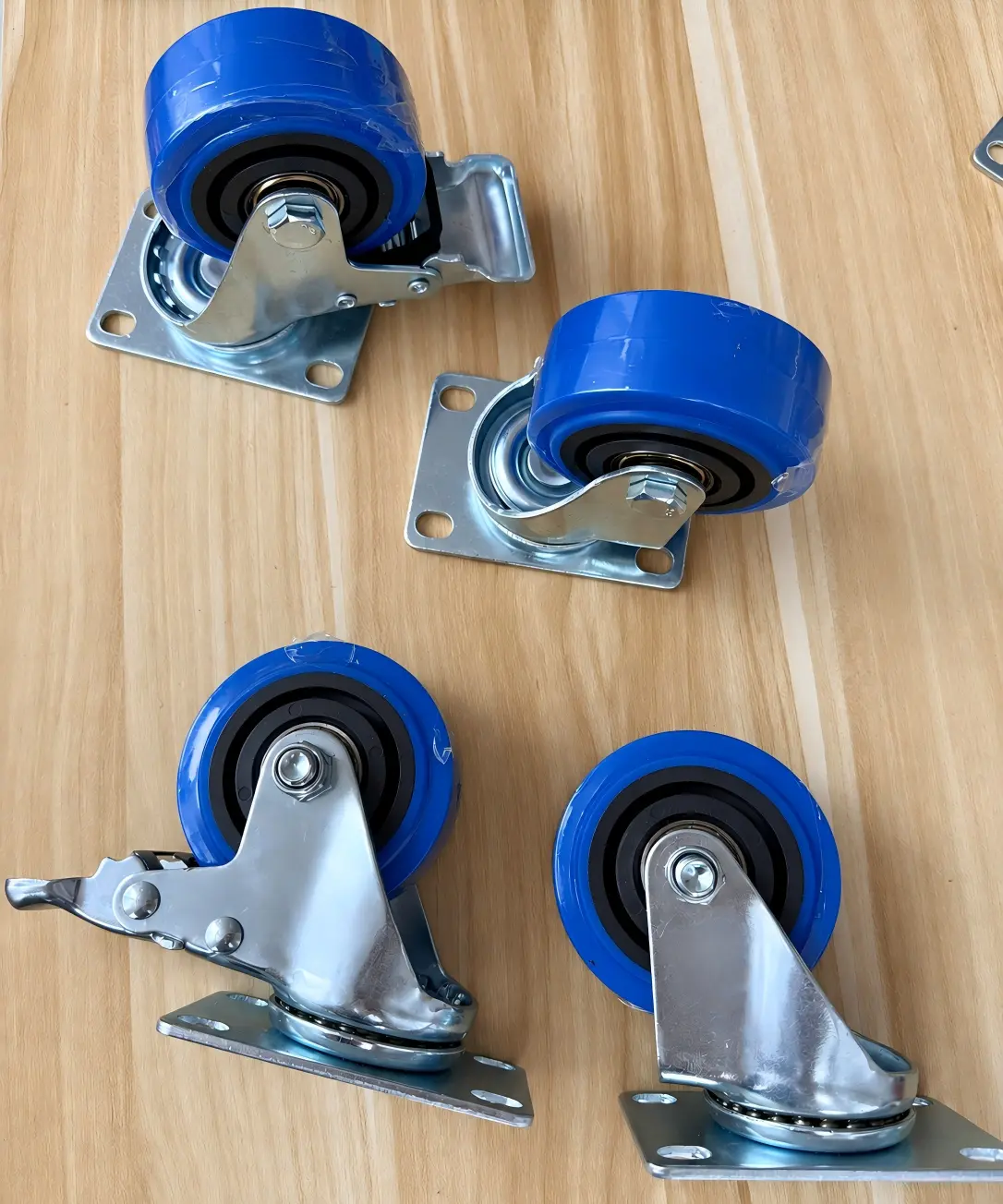
A stainless steel food-cart caster request refers partly to the bracket and hardware, while TPR describes the wheel tread. A zinc-coloured bracket in a photograph does not establish stainless steel. For wet seafood areas or equipment moved near pools, describe splash, salt, immersion and cleaning exposure separately. Do not infer whole-assembly water resistance from the tread material.
Medical trolley use also needs a defined scope. A general equipment or supply cart is different from patient transport or an application with specified hygiene, electrical or regulatory requirements. List those requirements in the project specification so the quotation can address them explicitly.
3. Balance Quiet Movement with Load Support
TPR should not be dismissed as a light-duty-only material, and it should not be assigned a high capacity merely because it is described as premium. Commercial ranges use different wheel sections, cores, bearings and brackets. Select a high-load assembly when the equipment needs it, then confirm that the mount and frame can carry the same duty.
For a 75, 100 or 125 mm wheel, diameter alone does not establish the rating. Use the TPR size and load-capacity guide to distinguish loaded cart weight, required capacity per supporting caster and the final assembly rating. Larger wheels may change rolling over joints, but they also change installed height and clearance.
4. Spend the Budget Where It Changes the User Experience
| Purchasing priority | Useful comparison | Decision to document |
|---|---|---|
| Lowest initial unit price | Compare equivalent dimensions, load duty and supply scope across material options. | Which performance compromises are acceptable for this project? |
| Quiet, frequent indoor movement | Compare complete TPR sample assemblies on the intended floor. | What rolling and noise result must the approved sample achieve? |
| High working load or difficult exposure | Compare the complete rated assembly, including PU or other alternatives when appropriate. | Which rating and environmental evidence applies to the quoted model? |
| Repair and repeat supply | Compare replacement-wheel fit and the availability of a stable approved drawing. | Can the same interface and bearing specification be reproduced? |
This is a specification comparison, not a universal price ranking. Compound, bearing type, metalwork, order quantity and packaging can change the price relationship between materials. For a premium furniture or hotel project, the cost of an unsuitable rolling experience may matter as much as the initial caster price.
5. Choose the Configuration That Delivers the Required Movement
Use unbraked swivel plate casters where the equipment needs free changes of direction. Choose TPR casters with a specified brake function where parking control is needed. Combine swivel and rigid plate casters when straight tracking is useful. For a threaded equipment connection, begin with the custom threaded-stem interface requirements.
Questions Buyers Can Put into Sample Approval
Can a caster be both quiet and wear-resistant?
These are separate acceptance questions. Compare sound and rolling feel on the intended route, and define a wear check appropriate to the actual duty. Do not translate either description into an untested service-life promise.
Does blue TPR guarantee a non-marking floor result?
Colour does not guarantee compound identity or floor compatibility. Agree a sample check on the intended finish, including stationary contact if the cart stays parked for long periods.
Should double bearings be specified for every premium trolley?
Choose the bearing arrangement for load, movement and fit. Define whether “double bearing” means the wheel hub or the swivel raceway so two suppliers quote the same construction.
Technical References
For general construction context, see Blickle’s standard rubber wheel families and Muvall’s TPR wheel and mounting overview. These describe those manufacturers’ ranges; they are not test reports or ratings for Gleam products.
Compare the Gleam TPR caster configurations
Request a Configuration-Matched Quotation
Send the trolley application, floor and cleaning conditions, loaded weight, mounting dimensions, required brake function and budget priorities. Include sample-approval requirements and the planned order quantity.